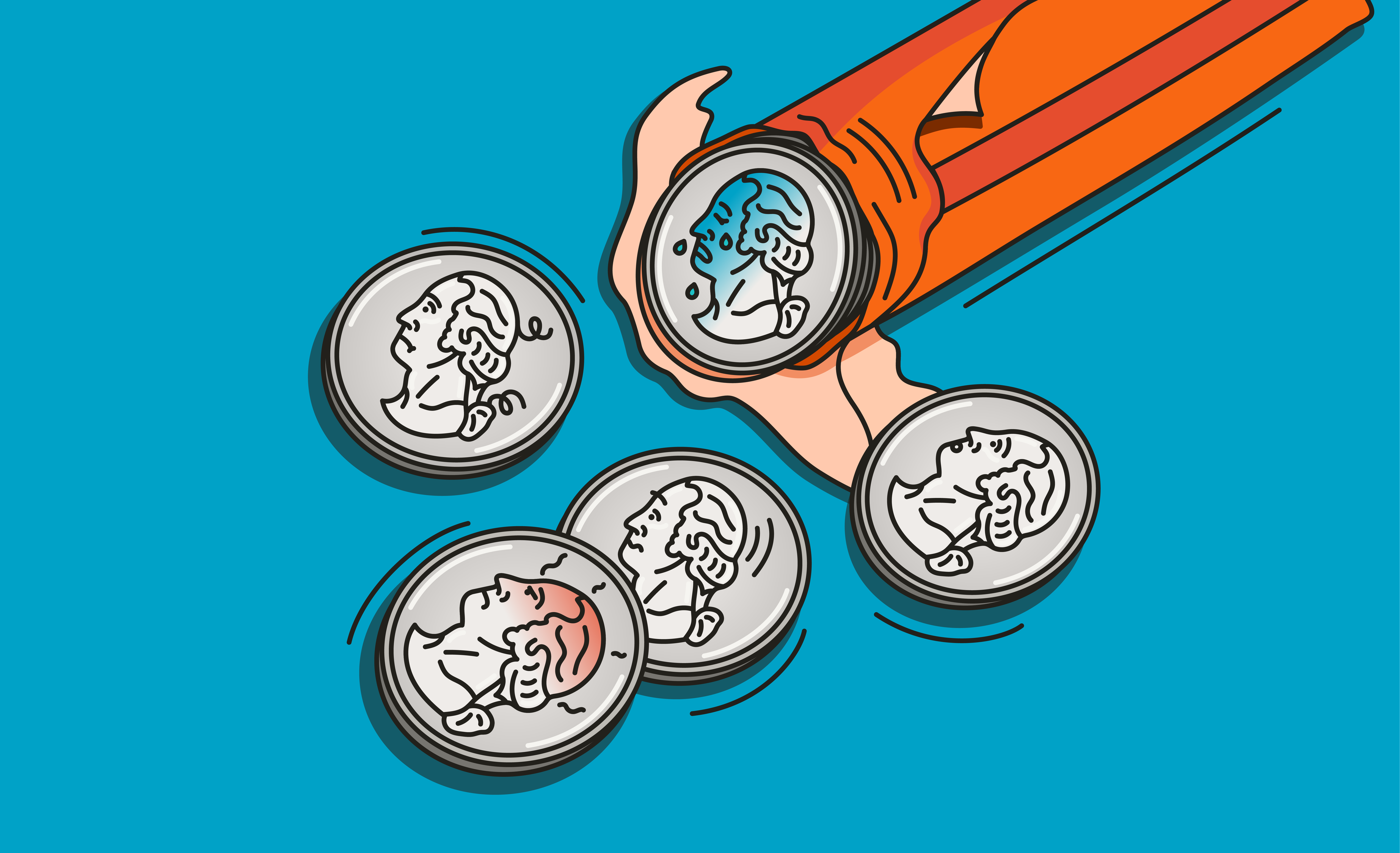
One of the most common questions posed to financial planners, advisors, and coaches is "should I save or invest this money?" The answer usually isn't an either/or scenario. For most people, a strategy combining both saving and investing is the smartest approach. Together, the two can powerfully set you up for success and financial independence.
We're living in a moment where choosing how to properly allocate your money requires careful thought. High-yield savings accounts are paying 4-5% APY rates we haven't seen in over 15 years. Meanwhile, the stock market delivered back-to-back years of 25%+ returns in 2023 and 2024, yet volatility remains a constant concern. And while inflation has cooled to 2.7%, it still quietly erodes the purchasing power of idle cash.
This guide will help you fully understand the differences between saving and investing, their pros and cons, and how to blend an approach that works for your unique goals. Whether you're building your first emergency fund or deciding where to put a year-end bonus, you'll walk away with a clear framework for making confident decisions.
Why this matters now
The stakes are real. According to Bankrate's 2025 Emergency Fund Report, only 41% of Americans could cover a $1,000 emergency expense with savings - the lowest level since 2020. Meanwhile, 27% have no emergency savings at all. On the investing side, FINRA research shows that 54% of adults aren't comfortable managing their own investments, yet waiting to invest costs dearly: a 10-year delay in starting can cut your retirement savings in half due to lost compound growth.
Understanding when to save and when to invest isn't just financial theory—it's the difference between security and stress, between retiring comfortably and working longer than you planned.
What is the difference between saving and investing?
Saving means setting aside money in low-risk, easily accessible accounts for short-term needs and emergencies. Investing means purchasing assets like stocks, bonds, or mutual funds with the goal of growing wealth over longer periods typically five years or more. Saving preserves your principal while investing seeks growth, with accompanying risk.
While saving and investing are often lumped together under the umbrella of "good money habits," they serve fundamentally different purposes in your financial life.
What does it mean to save?
When you save money, you're setting it aside in a safe and accessible place so it's available when you need it. Common savings vehicles include high-yield savings accounts, money market accounts, certificates of deposit (CDs), and even your checking account.
The goal of saving is to provide a foundation of stability. You aren't trying to earn outsized returns, you're building a safety net and preparing for short-term needs. These might include emergencies, vacations, holiday gifts, or an upcoming large purchase like a car down payment.
Savings grow more slowly because they're designed to be lower risk and highly liquid (meaning you can access your money quickly, often within hours). As of December 2025, the best high-yield savings accounts offer between 4.0% and 5.0% APY, while the national average sits around just 0.39%. That gap represents hundreds of dollars in potential earnings that many savers leave on the table.
Here's the key insight: with current inflation at 2.7%, a top-tier high-yield savings account actually lets your money grow slightly faster than prices rise. That's a historically unusual situation and a compelling reason to optimize where you keep your cash reserves.
Still, saving money is primarily about protection and access. To build true, long-term wealth, you also need to invest.
What does it mean to invest?
When you invest your money, you're putting it into assets expected to grow over the medium and long term. However, investing involves more risk, meaning your investments could also lose value sometimes significantly, at least temporarily.
Common investment options include stocks, bonds, exchange-traded funds (ETFs), mutual funds, index funds, real estate, and alternatives such as cryptocurrencies. You can invest through various account types: employer-sponsored retirement accounts like 401(k)s and 403(b)s, Individual Retirement Accounts (IRAs and Roth IRAs), and taxable brokerage accounts that offer more flexibility for non-retirement goals.
Investing's main objective is growth over a long period of time. You're accepting additional risk with the expectation that you'll earn significantly more than if you'd kept the money in cash. Historically, the S&P 500 has returned approximately 9-10% annually on average over the long term. In 2025 alone, the S&P 500 delivered roughly 19% in total returns, the third consecutive strong year for stock investors.
This higher return potential is exactly why investing is essential for retirement and other long-term goals. The difference between 4% savings returns and 9% investment returns might seem modest in a single year, but over 20 or 30 years, compound growth transforms that gap into hundreds of thousands of dollars.
A great rule of thumb: save any money you'll need within 3-5 years, and invest any money you can let grow for 5 years or longer.
Saving vs. investing: key differences at a glance
Feature | Saving | Investing |
Primary goal | Preserve capital, maintain access | Grow wealth over time |
Risk level | Very low | Low to High (varies by asset) |
Typical returns | 4-5% APY (high-yield accounts) | 7-10% historical average |
Time horizon | Short-term (0-5 years) | Long-term (5+ years) |
Liquidity | High access within hours/days | Lower - may take days |
FDIC/NCUA protection | Yes, up to $250,000 | No |
Best for | Emergency funds, near-term goals | Retirement, wealth building, long-term goals |
Inflation protection | Limited | Strong |
The pros and cons of saving
Pros of saving
- Your money is protected. Savings accounts at FDIC-insured banks and NCUA-insured credit unions are protected up to $250,000 per depositor, per institution, per ownership category. Joint accounts receive up to $500,000 in combined coverage. Since the FDIC was established in 1933, no depositor has ever lost a penny of insured funds even when banks have failed.
- You can access money quickly. When emergencies strike—medical bills, job loss, car repairs, home emergencies—your savings are available immediately. Most high-yield savings accounts allow same-day or next-day transfers. This liquidity is irreplaceable when you need cash now, not next month. Consider this: the Federal Reserve's Survey of Household Economics found that 37% of Americans couldn't cover an unexpected $400 expense with cash on hand. Don't be in that group.
- It's ideal for short-term goals. Planning a vacation, saving for a wedding, or building a house down payment in the next year or two? Savings accounts are the right choice. Investing money you'll need soon is simply too risky if the market drops 20% right before you need the funds, you could face painful losses with no time to recover.
- It reduces financial stress. Knowing you have a fully funded emergency fund creates peace of mind that's hard to quantify. A solid savings cushion means you won't lie awake worrying about unexpected expenses, and you won't be tempted to make emotional decisions about your investments during market downturns.
With Monarch, you can set up dedicated savings goals and track your progress in real time. Watching your emergency fund grow from 50% funded to 100% funded provides motivation and clarity that generic account balances simply can't match.
Cons of saving
- Returns are limited. Even the best high-yield savings accounts won't dramatically outpace inflation over the long term. While 4-5% APY is historically strong, it's still far below what diversified investments have returned over decades.
- You'll miss out on significant growth. Money sitting in savings could be compounding in the market. Over 20 years, $10,000 earning 4% grows to about $22,000. That same $10,000 earning 8% grows to nearly $47,000. The opportunity cost of over-saving is real and substantial.
- More cash doesn't always mean more security. Some people hoard cash because they fear the stock market, but this approach actually undermines long-term financial security. Holding excessive cash beyond your emergency fund and near-term goals creates a drag on your ability to build wealth and achieve financial independence.
The pros and cons of investing
Pros of investing
- Higher long-term returns. Investing consistently beats inflation and grows your wealth over extended periods. This is how retirement accounts transform from modest initial contributions into substantial nest eggs sometimes reaching hundreds of thousands or even millions of dollars over a career.
- Compound growth is extraordinarily powerful. Albert Einstein reportedly called compound interest the "eighth wonder of the world." When your investments earn returns, those returns then generate their own returns. Over two or three decades, this snowball effect becomes transformative. A 25-year-old investing $300 per month at 8% average returns would have over $1 million by age 65 having contributed only $144,000 out of pocket.
The U.S. personal savings rate currently sits at just 4.7%, far below the recommended 15-20% for building wealth (Federal Reserve Economic Data, 2025). Those who invest consistently—even modest amounts—dramatically outperform those who only save. - Investing helps you reach your biggest goals. Whether you want to retire comfortably, fund your children's education, buy a vacation home, or build generational wealth, savings alone won't get you there. The math simply doesn't work without investment growth. You need to invest to reach life's largest financial milestones.
- Diversification reduces your risk. By spreading investments across different asset classes - stocks, bonds, real estate, international markets, you smooth out volatility over time. When one asset class struggles, others may thrive. A well-diversified portfolio historically delivers solid returns with manageable risk.
Cons of investing
- Markets fluctuate sometimes dramatically. On any given day, your investment balance might swing up or down. During market corrections or bear markets, you could see your portfolio drop 20%, 30%, or more. While this is normal and temporary for long-term investors, it can be emotionally challenging.
- A long-term commitment is required. Investing only works if you give your money enough time to recover from inevitable downturns. The S&P 500 has never lost money over any 20-year rolling period in history, but shorter timeframes carry real risk of loss. If you might need the money within five years, investing may not be appropriate.
- Your emotions can sabotage your returns. Selling in a panic when markets drop and trying to "time the market" are among the costliest investor mistakes. Studies consistently show that emotional decision-making costs the average investor 1-2% in annual returns—a devastating drag over decades. FINRA's 2025 research found that only 8% of investors are willing to take substantial risks, yet paradoxically, 62% of investors under 35 feel they must take big risks to reach their goals. This tension often leads to poor timing decisions.
- Investing can feel overwhelming without guidance. Knowing which accounts to open, what investments to buy, how to diversify, when to rebalance, and how to optimize for taxes can paralyze beginners. This is where Monarch can help giving you a clear picture of your entire financial life so you can make informed decisions with confidence.
When should you save?
Save your money when:
- You're building an emergency fund. Financial experts consistently recommend saving 3-6 months of essential expenses before doing anything else. If you have variable income, are self-employed, work in an unstable industry, or are a single-income household, aim for 6-12 months.
- You'll need the money within 5 years. Saving for a house down payment in three years? A wedding next summer? A new car in 18 months? Keep that money in savings where it's protected from market swings.
- You have upcoming large expenses. Property taxes, insurance premiums, holiday spending, planned home repairs - anything you know is coming should be saved for, not invested.
- You're paying off high-interest debt. If you're carrying credit card balances or other debt with interest rates above 7-8%, focus on eliminating that before investing significantly. The guaranteed "return" of paying off 20% APR debt beats any realistic investment expectation.
- You want a buffer for peace of mind. Some people sleep better knowing they have extra cash reserves beyond the strict minimum. That psychological benefit has real value.
When should you invest?
Invest your money when:
- You have a fully funded emergency fund. Once you've built that 3-6 month cushion, additional money earmarked for the long term belongs in investments.
- Your goal is 5+ years away. Retirement in 25 years? Your child's college in 15 years? A sabbatical in 7 years? These timelines give investments room to grow and recover from any short-term volatility.
- Your employer offers a 401(k) match. If your company matches retirement contributions, invest at least enough to capture the full match. This is literally free money, an instant 50-100% return before your investments even grow.
- You've already maxed out "free" returns. After capturing employer matches and building emergency savings, direct additional dollars toward tax-advantaged investment accounts (401k, IRA, Roth IRA) before taxable brokerage accounts.
- You're financially stable and won't need the money. Investing works best when you can truly set it and forget it for years. If you're likely to raid your investment account for non-emergencies, you're not ready to invest that money yet.
How much should you save before investing?
This is one of the most common questions in personal finance, and the answer is more nuanced than a single number.
The baseline: 3-6 months of essential expenses in emergency savings. Calculate your true monthly necessities like housing, utilities, food, transportation, insurance, minimum debt payments and multiply by at least three. This is your floor. For many people, that means $10,000-$25,000 in easily accessible savings before investing becomes a priority.
However, don't wait until your emergency fund is perfect to start investing. If your employer offers a 401(k) match, contribute enough to get the full match immediately even while building your emergency fund. That match is too valuable to delay.
A practical approach: save $1,000 as a starter emergency fund, capture any employer match, then aggressively build your emergency fund to the 3-6 month target, then shift focus to broader investing.
2025 retirement contribution limits to keep in mind:
- 401(k) and 403(b): $23,500 (plus $7,500 catch-up if age 50+, or $11,250 if age 60-63)
- Traditional and Roth IRA: $7,000 (plus $1,000 catch-up if age 50+)
Monarch's goal tracking features let you monitor your emergency fund progress alongside your investment contributions, so you can see exactly how close you are to each target without juggling spreadsheets.
Finding the right balance: A framework for your money
The save-vs-invest decision isn't binary, most people should be doing both, in the right proportions for their situation. Here's a practical framework:
The priority waterfall
- First: Basic emergency fund — Save $1,000-$2,000 as quickly as possible
- Second: Employer match — Invest enough in your 401(k) to capture full employer matching
- Third: High-interest debt — Pay off anything above 7-8% interest rate
- Fourth: Full emergency fund — Build to 3-6 months of expenses
- Fifth: Max tax-advantaged investing — Fill your 401(k), IRA, and HSA
- Sixth: Other goals — Taxable investing, additional savings for mid-term goals
How to split your surplus income
Once you've covered essentials and minimum debt payments, how should you allocate money you have left over?
A commonly cited guideline is the 50/30/20 rule: 50% to needs, 30% to wants, and 20% to savings and investing combined. But how you split that 20% between saving and investing depends on where you are in the framework above.
If your emergency fund is underfunded, that 20% goes entirely to savings. If your emergency fund is complete and you're debt-free, most of that 20% should flow toward investments. Many financial planners suggest a long-term target of 15-20% of income going specifically toward retirement investments.
Saving vs. investing by life stage
In your 20s
Your twenties are about building foundations. Focus on establishing a starter emergency fund, getting out of high-interest debt, and beginning to invest even small amounts. Time is your greatest asset; money invested now has 40+ years to compound.
Priority mix: Build emergency fund to 3 months → capture any employer match → pay off credit cards → increase emergency fund and investments simultaneously.
The power of starting early is staggering. Investing $200/month from age 25 to 65 at 8% returns yields approximately $622,000. Waiting until age 35 to start yields only $266,000 - less than half, despite only a 10-year delay.
In your 30s and 40s
These are typically peak earning years, often accompanied by peak expenses: mortgages, children, career investments. Balance is crucial. Maintain your emergency fund, continue consistent retirement contributions, and begin saving for mid-term goals like college or a second home.
Priority mix: Keep 6 months expenses saved → max out employer match and consider maxing 401(k) → open 529 plans if you have children → invest additional surplus in taxable accounts.
Approaching retirement (50s and 60s)
As retirement nears, gradually shift toward preservation. Increase your cash reserves to 1-2 years of expenses, reduce portfolio risk, and take advantage of catch-up contribution limits. The new 2025 "super catch-up" allows those aged 60-63 to contribute an additional $11,250 to their 401(k) beyond the standard limit.
Priority mix: Maintain larger cash buffer → maximize catch-up contributions → shift investments toward more conservative allocation → begin modeling retirement income needs.
Common mistakes to avoid
- Over-saving out of fear. Keeping $100,000 in savings "just in case" when you only need $30,000 for emergencies costs you significantly in lost growth. Fear of the stock market shouldn't trap money that could be building your future.
- Investing money you'll need soon. The opposite mistake - investing your emergency fund or next year's vacation savings can force you to sell at a loss when you need the cash.
- Trying to time the market. Waiting for the "right time" to invest usually backfires. Time in the market consistently beats timing the market. Regular, automated investing removes the temptation to guess.
- Ignoring tax-advantaged accounts. Investing in a taxable brokerage account before maxing out 401(k) and IRA contributions leaves tax savings on the table.
- Not automating. Manual saving and investing requires willpower every month. Automation makes both inevitable. Set up automatic transfers to savings and automatic contributions to investment accounts so the right behaviors happen without constant decisions.
Making saving and investing work together
Saving and investing aren't competing strategies, they're complementary tools that work best in tandem. Saving gives you a solid foundation and a safety net for life's inevitable surprises. Investing gives your future self the wealth needed for a comfortable retirement and major life goals.
What matters most is finding a balance that works for your current situation, then adjusting as your life evolves. You don't need a perfect plan, you need to start, stay consistent, and course-correct along the way.
Monarch makes this easier by bringing your complete financial picture into one view. Track your emergency fund progress, monitor your investment growth, project your cash flow, and see exactly how your money moves all in one place. When you can see everything clearly, making confident decisions about saving vs. investing becomes intuitive rather than stressful.
Your financial journey is unique. Start where you are, use the frameworks above, and build the future you deserve.
FAQs
Is it better to save or invest money?
Neither is universally "better" - they serve different purposes. Saving is better for short-term needs, emergencies, and money you'll need within five years. Investing is better for long-term goals like retirement where you can tolerate volatility in exchange for higher growth. Most people need both working together.
How much should I keep in savings versus investments?
Start with 3-6 months of expenses in savings for emergencies. Add savings for any goals within five years. Everything beyond that especially retirement savings should generally be invested. A common allocation might be $20,000-$40,000 in savings with the rest of your net worth in investments, but this varies based on income, stability, and goals.
Should I keep cash in my checking account?
Keep approximately one month's expenses plus a small buffer in checking to cover bills and daily spending. Everything beyond that should move to a high-yield savings account earning 4-5% APY, rather than sitting in a checking account earning little to nothing. Monarch's cash flow features help you understand your monthly spending patterns so you know exactly how much checking buffer you actually need.
Should I invest if I have debt?
It depends on the interest rate. If you're carrying high-interest debt (above 7-8%, and especially credit card debt at 20%+), prioritize paying that off, the guaranteed "return" of eliminating high-interest debt beats likely investment returns. If you have low-interest debt like a mortgage at 3-4% or federal student loans, it's reasonable to invest simultaneously since your investments will likely earn more than the debt costs.
What about keeping cash versus saving?
Holding physical cash or keeping money in a zero-interest checking account is not the same as saving. "Saving" means putting money into interest-bearing accounts where it can grow, even modestly. Cash stuffed in a mattress or sitting in a basic checking account loses purchasing power every year to inflation.
How does inflation affect saving vs. investing?
Inflation erodes purchasing power over time. At 2.7% inflation, $100 today will only buy about $76 worth of goods in 10 years. High-yield savings accounts (4-5% APY) currently slightly outpace inflation, preserving your purchasing power. Investments have historically outpaced inflation by 4-7 percentage points annually, actually growing your purchasing power over time. This is why long-term money needs to be invested.
At what age should I start investing?
As soon as you have a basic emergency fund and access to investment accounts. There's no "too young" to start investing. Even teenagers with earned income can open custodial IRAs. The earlier you start, the more time compound growth has to work in your favor. Someone who invests from age 20-30 and then stops will often end up with more money at 65 than someone who starts at 30 and invests until 65, simply because of the extra compounding time.
Can saving and investing work together?
Absolutely and they should. Think of saving as your defense (protecting you from emergencies and short-term needs) and investing as your offense (building long-term wealth). A complete financial strategy uses both. You might save 10% of your income while investing another 15%, adjusting the ratio based on your current goals and where you are in the priority framework.
Related Monarch Resources
Ready to take the next steps? Continue your financial education with these related guides: