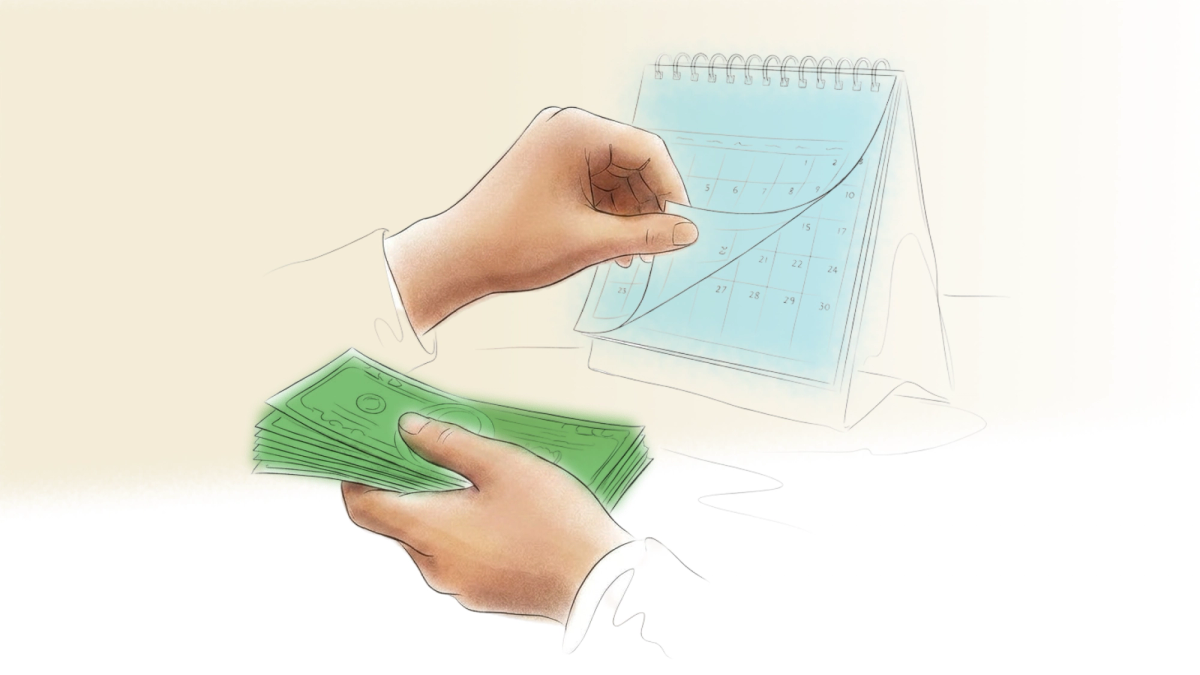
Each spring, as Americans dutifully file their taxes, a large percentage of those will receive what feels like a financial windfall. A tax refund is often welcomed relief and a chance to right a family’s financial ship. According to the IRS Data Book, for the 2024 tax year, more than 117 million refunds were issued. The average refund was about $3,000. For many, a few thousand dollars back in your pocket is a meaningful lump sum that can be put to work to improve your situation and net worth.
If you find yourself in a position of receiving a tax refund this season, you may be wondering how to best put that money to use. You’re not alone in that. The smartest financial moves depend on your personal circumstances and goals. This guide will walk you through the smartest ways to put your tax refund to work strategically and impactfully.
How to Decide What to Do With Your Tax Refund
When that tax refund hits your bank account, let’s take a moment to pause and get a game plan in place. It’s tempting to spend it right away, but it’s crucial to think about what’s going to best set you, and your family, up for longer term success. Financial windfalls, even if it's just a tax refund, can trigger emotional spending according to behavioral economists. Emotional and impulsive spending won’t get you any closer to true financial independence.
Our experts at Monarch recommend a “waterfall method” for thinking about how to use your tax refund:
- Are you protected in case of an emergency?
- Are you paying down high interest debt?
- Are you actively building long-term wealth, especially for retirement?
- Are there other near-term goals to fund?
Monarch’s tools, such as the new Goals feature, can help you answer these questions and assist you in giving every dollar a job even before the money hits your account.
Did you know the IRS also allows you to split your refund into multiple accounts using Form 8888? Particularly, if you need additional guardrails to prevent you from spending the refund or using it in an illness if it’s deposited directly into your checking.
Monarch’s Tax Refund Waterfall: 12 Smart Steps
Set aside 10-20% for Fun and/or a Charitable Cause
Yes, you heard that right. It’s okay to take 10-20% of your tax refund to treat yourself and donate to a cause you care about. Life is long and money should be used in a way that enhances the quality of your life as well as the lives of others.
2. Get $1,000 into an Emergency Fund
The first step to a better financial future is to have a minimum of $1,000 set aside in an emergency fund. This isn’t a fully funded emergency savings account, but it's a start. If you don’t already have an emergency fund, make sure this is your first action.
A great place to keep emergency savings is in a high-yield savings account or money market account - something liquid that is FDIC or NCUA insured. Locking up emergency funds in certificates of deposit (CDs) or investing the money is not recommended due to illiquidity and short-term risk of loss.
Even if you have high interest debt to pay off, setting aside $1,000 in an emergency fund is still the first step. You’ll return to fully fund the emergency account once your high interest debt is down to a manageable amount or fully paid off.
A thousand dollars in a savings account might not seem like a worthwhile endeavor but it can dramatically reduce your financial stress and prevent future credit card debt should an unexpected expense arise. What qualifies as an emergency can range quite dramatically. From medical bills to home repairs, car fixes, and more, we never know what life is going to throw at us. A thousand dollars may not totally cover the cost of an emergency, but it’s an excellent start and can cover many types of emergencies.
3. Pay Off Your Highest-Interest Debt
Now that you’ve set aside $1,000 into a high yield savings for future emergencies, it’s time to switch gears and focus on paying off your highest interest debt. At Monarch, we’d define that as anything with a rate over 25%.
There are various methods you can implement to tackle high interest debt. The first is the snowball method. This is paying down debt from lowest balance to highest balance, regardless of the interest rate. We wouldn’t recommend using this exact method if you’re focusing on your highest interest debts, but you could arrange any debt with interest rates above 25% in order of smallest to largest balance and then pay them down in that order instead, if getting some quick wins under your belt would help motivate you to keep going.
The second method is the avalanche. With this process, you’ll focus on paying off the highest interest debt first and work your way down to the lowest interest rate. Each method has its pros and cons and it's important to choose what’ll work best for you based on your personal psychology, motivations, and money mindset.
If you choose the snowball method, you’ll build momentum more quickly but will pay more in interest over the long run. The avalanche method, however, focuses on saving money on interest by paying the highest interest rate debt first. The momentum in this method doesn’t come quite as easily, but you will save significantly more money in the long run.
4. Increase Your Retirement Savings (Get that Company Match)
If the past couple of steps are already completed, our experts recommend that you next take advantage of any employer matching on retirement accounts if it’s available. If your company offers a match, you’ll want to contribute enough to receive the full amount, up to a maximum of 6% of your income to start. If your company offers a more generous match than that but you still have high interest debt or haven’t finished filling out your emergency fund, we’d recommend you hold off on overcontributing to retirement at the expense of the other two steps. Think of the company match as free money, and leaving money on the table is not usually a good decision. If you’re unsure of the details of your company’s match program, confer with your HR or benefits department to understand how much you’ll need to put in to receive the full amount.
Over the long term, the company match will compound along with your contributions to exponentially grow your retirement savings. This is an important step in wealth building and reaching your retirement goals.
If you’re already maxing out an employer-sponsored retirement plan, or if your company doesn’t offer a match, you can redirect your tax refund to other retirement accounts such as a Roth IRA or Traditional IRA.
5. Pay Down The Rest of Your High Interest Debt (7% or higher)
Your highest interest debt is gone. Your retirement savings is on track. Now you can begin paying off debt with interest rates that are still high but not so high that you shouldn’t be getting an employer match. This is yet another important step in building your personal balance sheet. Typically, we don’t want to keep debt with an interest rate that’s higher than what we can earn long term in the investment markets.
For example, if you have a 3-4% mortgage, there’s mathematically not a lot of reason to rush paying it down with extra money when you can instead historically earn more by investing that money. The historical return of the stock market over the past 100 years is around 7%, accounting for inflation. This means if you have debt that’s higher than 7%, you’re better off paying it down quickly. If you have debt that’s lower than 7%, then any extra cash is better off invested for the long-term.
Again, you can choose between snowball or avalanche methods to pay down your debt - our experts recommend the avalanche method to save yourself the most on interest over time, but the snowball method if you’re having a hard time sticking to a paydown plan.
6. Fully Fund Your Emergency Savings
If you’ve reached this step, congratulations. You’re crushing it. Let’s keep going. If you find yourself here with a tax refund, now is the time to really build up your emergency fund. A fully funded emergency savings account is typically 3-9 months of your average (not minimum) living expenses.
Why do we need that much in a savings account? Well, because life is unpredictable. If you lose your job or have an unfortunate medical event, a fully funded emergency savings account can save you from financial ruin or expensive debt.
Did you know that you have a one in four chance (that’s 25%!) of becoming disabled either temporarily or permanently before you retire? This is a very real risk, and thus having an emergency fund is critical to preserve your wealth.
To decide how much to target, think about your risk factors for emergencies. Do you own a home or other real estate? Do you have children or pets? Do you have a partner who doesn’t earn income? Do you have a unique or high-level job that would be difficult to replace? Does anyone in your household have major medical issues that wouldn’t be fully covered by insurance, or does anyone participate in risky ventures that could cause major medical issues or disability? If you have none of these risk factors, you can probably target about three months of living expenses. If you have one or two of these factors, you probably need closer to six months of living expenses. If you have any additional risks, you might need more like nine months of expenses.
7. Fund Other Goals
Would you like to take a nice vacation this year? Buy a new car? Planning for a wedding or a baby? Or perhaps you’re ready to fund a taxable brokerage account. If this is where you are on your financial journey, you’re ready to use a tax refund to fund other goals. These goals may be short-term in nature (think vacations, new car), intermediate (family planning, house down payment), or long-term (earlier retirement, second home).
To complete this step, you’ll first need to prioritize these goals. Make sure you open the correct accounts, whether that’s a high yield savings or taxable investment account. Don’t forget to also create these goals within Monarch so you can automatically track your progress.
8. Fund a 529 Education Savings Plan
If you have children, contributing to a 529 plan allows investments to grow tax-free when used for qualified education expenses. Even modest annual contributions can compound significantly over 10-20 years. Many states offer residents tax deductions for 529 plan contributions. Each state is different, however, so it’s crucial to research what your state offers.
There was also a recent and significant development regarding 529 plans. As of 2024, owners of 529 accounts can roll up to $35,000 of a 529 into a Roth IRA for the beneficiary. This is great news for those who might be worried about overfunding a 529 if the child chooses a path outside of traditional college or doesn’t need the funds for education.
9. Max Out Your HSA
In the last decade, Health Savings Accounts (HSA) have become all the rage. They are tax efficient and quite flexible for those who are enrolled in high-deductible health plans. If you’ve reached this eighth step, maxing out your HSA is a solid move.
For 2026, the maximum contribution to an HSA is $4,400 for individuals, $8,750 for families, and an extra $1,000 on those amounts for anyone over 55 years of age (this is called a catch-up contribution).
10. Make Extra Mortgage Payments
If you’re lucky enough to have purchased a home during the ultra low interest rate era, this step might not be for you. However, if you are one of the 31% of homeowners with an interest rate above 5%, then making an extra mortgage payment with your tax refund can reduce total interest paid, shorten your loan term, and improve long-term cash flow.
It’s crucial to confirm that any extra mortgage payments are applied to the principal balance.
11. Improve Your Home’s Value or Efficiency
Energy-efficient upgrades in your home can also improve long-term cash flow by reducing monthly utility bills but will also increase your home’s resale value. A few upgrades you might consider include insulation improvements, smart thermostats, and solar panels.
It’s okay to put tax refunds toward home improvements, but be sure to do so in a way that efficiently increases your home’s value and energy efficiency.
12. Invest in Yourself
While we’re busy investing in our financial goals, it’s key to remember to continue investing in yourself. Career growth often offers the highest return on investment. The final step in wisely using your tax refund is self-development through professional certifications, continuing education, coaching, and side hustle tools. Investing money to increase your earnings potential has lifelong benefits.
Thinking Through Tax Refund Allocation
In this next section, let’s discuss some very common questions and misconceptions regarding tax refunds and best practices when you receive one.
How should I Allocate a $1,000/$3,000/$5,000+ Refund?
As you go through the above list of steps for a tax refund. Depending on the size of your refund and your current financial situation, we can allocate the funds to one priority or multiple. For example, at the $1,000 level. This smaller amount should be used primarily for stabilization of your finances.
At the $3,000 level, you’ll also want to prioritize stabilization, but may also be able to move the needle in paying down high interest debt. Put $1,000 to establish an emergency fund, and $2,000 to the debt. If you have already accomplished these two steps, then you may be able to help fully fund your emergency savings (3-6 months of living expenses) as well as contribute to an IRA or fund a shorter-term goal. There’s no right answer as to how to split the money percentage wise.
For a refund of $5,000 or more, you’ll really want to split this money wisely. Again, emergency funds and high interest debt should be at the top of your list. Beyond that, you could split the money evenly between retirement, shorter-term savings, and one of the other steps 7-12.
Whether you choose to split your refund evenly or allocate it 70/20/10 (70% to debt and savings, 20% to other goals, 10% to fun) is completely up to you and should be based on your personal values.
Should I Pay Off Debt or Invest with My Tax Refund?
This is a super common question that doesn’t necessarily have a black or white answer. Essentially, if your debt interest rate is above 7-10%, debt payoff usually wins.
If your interest rate is mid to low single digits, then investing the money is usually a better option over the long-term. When you’re in doubt, remember to eliminate high interest debt first, build an emergency fund, and then invest.
What are Some Common Tax Refund Mistakes?
There are some common tax refund mistakes you’ll want to avoid this season. First and foremost, avoid spending your entire refund immediately. There’s so much you can accomplish with a tax refund if you first pause, prioritize, and put a responsible plan in place.
Secondly, don’t ignore your high-interest debt. This debt can be difficult to eliminate, so using a lump sum like a tax refund is powerful and significantly moves the needle.
Lastly, don’t fail to adjust your withholdings for this current year. A large refund signals you’re paying too much in and that money could be better put to use elsewhere. Adjust your W-4 to get your refund closer to zero. Use the IRS Tax Withholding Estimator to figure out how much you need to adjust.
How do My Partner and I Decide on a Plan for Our Refund?
Money conversations are easier when framed around shared goals. If you and your partner have different ideas on how to use a tax refund, first sign up for Monarch and get a transparent shared view of your full financial picture. This can help guide your discussions. Second, each of you should list out your top priorities. From there you can identify any overlaps and then come to a compromise. A tax refund is a great opportunity to be transparent about your finances and discuss your shared vision for the future.
Is a large Refund Good or Bad?
Ultimately, a large tax refund means you overpaid on your taxes during the year. It’s not that the government is giving you free money, it’s the government returning money that was already yours.
Sure, getting a tax refund can be seen as a form of forced savings. Yet, for the financially savvy, it’s best to adjust your withholdings so you pay less during the year and get closer to a zero dollar tax return.
To adjust your withholdings, you can work with your HR or benefits department. You’ll need to fill out a new W-4 form. You can withhold less if you’re receiving too big of a refund, or withhold more if you owe money during tax season. This will change your take home pay amount. You can then use Monarch to budget for changes in your monthly net income.
Turn Your Refund into Momentum
It’s best practice to think of a tax refund as an opportunity to inject a bit of positive momentum into your personal finances. If used wisely, tax refunds have the power to eliminate debt, build security, accelerate your retirement savings, and perhaps even most importantly, it can reduce your financial stress in a meaningful way.
If you’re wondering how to allocate your tax refund, fast forward to a year from now. What will your future self thank you for? Getting out of debt and setting up an emergency fund might not be the most exciting move for a chunk of money at the moment, your future self would disagree.
Use your refund for forward momentum and good habit building.
FAQs
What is the smartest thing to do with a tax refund?
Build emergency savings and pay off high-interest debt first. These simple and foundational actions will allow you to then focus on longer term wealth building.
Should I invest my tax refund?
Potentially! If you have stable income, emergency savings, and manageable or no debt then investing your tax refund is a smart move.
What percentage should I save?
Ideally, you’ll want to allocate 80-90% of your tax refund to financial goals, with an emergency fund and paying down high interest debt as the top priorities. Beyond that, it is reasonable to spend 10-20% on personal enjoyment.
How should I split my refund?
This is going to vary from household to household, but in general, it’s a good idea to think of the big picture. You’ll want to prioritize protection, then debt reduction, then long-term growth, then shorter term goals, and lastly fun.