Babies come with startup costs. In the first year alone, you can expect to spend about $31,000, accounting for child care costs, to grow your family. Without childcare, it’s about $15,000 less ($16,000). According to inflation-adjusted numbers from U.S. News and the U.S. Bureau of Labor Statistics, it costs around $322,427 to raise a child from infancy to 18.
When it comes to growing your family, planning your finances ahead of time will help you in the long run. You can help your family avoid unnecessary debt, manage both expected and unexpected expenses, and grow your wealth for your little one’s future. It can also help you manage your finances around daycare costs, or explore what it would look like for one parent to stay home.
Monarch can help you break down the costs, where you can save, and how to plan out saving not only for your child’s first year, but what comes after.
How Much does a Baby Actually Cost in the First Year?
In short: About $16,000 without child care, and about $31,000 with.
In long: Baby costs will vary greatly depending on where you live, your insurance premiums, how much you decide to spend on gear, how the baby is fed, and if you rely on child care in the first year. While there are options to save, on average, you can expect to pay:
Baby gear | $5,800 |
Diapers and supplies | $800 |
Formula | $2,000 |
Food | $750 |
Insurance | $3,609 |
Delivery (with insurance) | $2,854 |
Full-time child care | $14,802 |
TOTAL without child care | $15,813 |
TOTAL with child care | $30,615 |
To get an idea of what you’ll need and how much you’ll be spending, here’s a breakdown of how much you’ll expect to spend for your new family member.
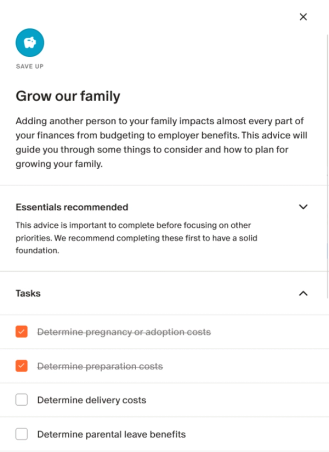
Monarch Pro Tip: If you’re not sure where to start, Monarch can guide you through the financial steps to having a baby. Monarch offers customized advice for growing your family under the advice tab, with goals, checklists, and guidance on what to tackle next.

One-Time Costs You Need to Budget for Before Baby Arrives
Babies come with startup costs, as you’ll need to have supplies and services ready to welcome your little one into the world. Here’s a list of what you’ll expect to spend on.
Medical and Delivery Costs
On average, it costs $20,416 (including $2,743 in out-of-pocket expenses) for prenatal, postpartum, and delivery-related costs if you give birth in a hospital or birthing center. While your insurance should cover anything that isn’t out-of-pocket, it’s important to be mindful of the deductible as you approach the delivery date. You may pay more or less depending on if you opt to get an epidural, are induced, have a C-section, or if there are complications with the birth and/or the baby’s health.
Something else to be aware of is that your OBGYN may request a deposit or a prepayment plan in the months leading up to the delivery, with the remainder of the costs being billed after the baby is born. Ask your doctor’s office what their billing practices are, and see if you need to roll the payments into your current budget.
Some of the charges you can expect to see can include:
- OBGYN appointments
- Prenatal testing
- Ultrasounds
- Labor and delivery
- Postpartum care
- NICU care
Essential Baby Gear and Nursery Setup
Don’t know where to start when gearing up for your new arrival? Monarch has a handy list to help you prepare and budget out what you need. Prices will vary depending on the items, area, and your preferences, so be sure to do your research.
If you have a baby registry and/or plan on having a baby shower, it can also be helpful to request this gear. Many of these items, such as strollers, toys, clothes, books, cribs, and other gear can be bought secondhand or handed down, which can save you a large amount in startup costs. Some items, however, like mattresses, car seats, and medical supplies, should be bought new for the sake of hygiene and safety.
While you don’t have to get every item on this list, this will give you a good baseline of supplies you’ll end up using in the first year.
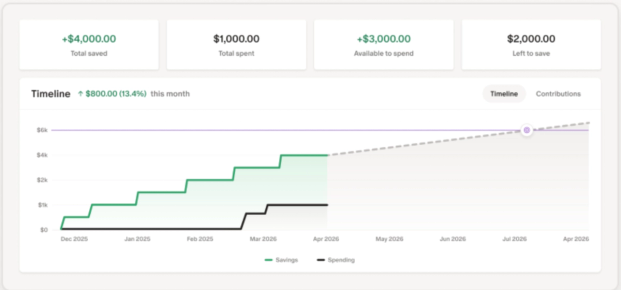
Monarch Pro Tip: Watching your progress makes reaching your savings goals more attainable and keeps you accountable. You can set a Save Up goal for Baby Gear in Monarch, which helps you track your progress and integrate your budget and your savings.

General Nursery Supplies
How you set up your nursery is entirely up to you. Many parents like to personalize their nursery by giving it a fresh coat of paint or wallpaper, and adding decor with a theme.
- Wallpaper/paint and decor
- Receiving blankets
- Burp cloths
- Large blanket for tummy time/crawling
- Book and toy shelves
- Rocking/glider chair
- Drawer or dresser set
- Small clothes hangers
- Diaper pail and liners
- Laundry basket
- Storage baskets or boxes
- Totes for storage
- Humidifier
- Monitor set
For Sleep
Doctors recommend keeping nothing in the crib for the first 12 months of an infant’s life to prevent suffocation, including blankets, bumpers and stuffed toys. Be sure that your crib or bassinet is approved for safe sleep.
- Bassinet (with a bedside option if you want baby close) OR
- A crib with a bassinet attachment
- Infant-safe mattress
- Waterproof mattress liner
- Fitted mattress sheet
- Swaddles
- Pacifiers
- White noise/sound machine
Clothing
Babies go through clothes quickly, which is why your best bet is to get these items used. Keep in mind that, between spills, stains, blowouts and spit up, you might expect to go through multiple outfits a day, so having a rotation that fits in with your laundry schedule is a good idea.
- Summer clothes
- Winter clothes
- Cold-weather supplies, including hats, gloves, and coats or snowsuits
- Pajamas
- Shoes or comfortable slippers
- Socks
- “Special” outfits for photo sessions, holidays, or special events
- Bathing suit
Diapers
This is one of the biggest startup and recurring expenses for parents. Whether you go with cloth or disposable, have your kit ready before the baby comes home for the first time. This includes:
- Diapers (either disposable or cloth)
- Wet wipes
- Diaper rash cream
- Changing table and pad
- Storage/organization set
- Changing pad liners
- Travel changing set
- Diaper bag and supplies
If you plan on using cloth diapers:
- Cloth diaper set
- Diaper linings
- Pins or velcro, if they come separately
- Cleaning service fees OR
- Cleaning supplies, if you’re doing it at home
Cleaning Up
Baby bathing supplies can be a bit more expensive than standard soaps, since they’re formulated for sensitive skin. You should get:
- Baby soap/shampoo
- Baby lotion
- Infant tub
- Wash wipes
- Towels
- Nail clipper set
- A soft hairbrush
- A toothbrush
Medical Supplies
While nobody likes to think about their baby getting sick, it’s important to have these items on hand so you can address, prevent, and diagnose any issues, along with any additional supplies or medications recommended by your pediatrician.
- Infant pain relief/fever reducer
- Gas drops
- Petroleum jelly
- Infant thermometer
- Sunscreen
- Infant electrolyte replacer
- Vitamin D or multivitamin drops
- Bulb syringe
Postpartum Recovery Supplies
Recovering after giving birth takes time. These supplies can be helpful to have on hand while mom recovers.
- Nipple pads (if nursing)
- Lanolin cream
- Pads
- Ice packs
- Topical spray
- Postpartum underwear
- Electrolyte fluid
- Maternity/breastfeeding friendly tops and dresses
- Prenatal vitamins
- Food delivery subscription
- House cleaning subscription
For Feeding
Whether you’re breastfeeding, using a pump, using formula, or a combination of the three, you can expect some startup costs when it comes to feeding your baby. Generally, you’ll want to buy these new and not used for health and safety reasons.
- Bottles
- Bottle cleaning supplies
- Breast pump
- Nipple guard (if breastfeeding)
- Breastfeeding support pillow
- Breastfeeding cover
- Formula (if formula feeding)
- Bottle sterilizer
Once baby moves on to solid foods, you’ll want to invest in:
- A sippy cup or bottle
- Feeding spoons
- Infant safe bowls and plates
- Bibs
- A high chair
- Baby food
- Blender (if making your own)
- Storage jars or trays (if making your own)
Toys
Toys are important for development, as well as keeping your child occupied. Fortunately, there’s a large market for used toys both at consignment stores and online. As your baby grows, the toys they play with will change, meaning you’ll want to update what they play with to keep up with development milestones.
Some good toys to have on hand include:
- Rattles
- Mobile
- Playing mat
- Teething toys
- Blocks
- Stuffed animals
- Age-appropriate books
- Batteries for electronic toys
For the Car
Taking an infant in the car takes special consideration, as they’ll need an approved car seat and restraint system. Beyond that, there are a few other supplies that are good to have on the road.
- Car seat
- Toys
- Car seat pillow/cover set
- Car mirror
Note that car seats should NEVER be bought used, as it is not possible to verify if the seat has taken damage from a previous accident. If you’re having trouble finding an affordable car seat, you may qualify for a free or discounted one through Medicaid, a Women, Infant, Children (WIC) program, your insurance plan, or local nonprofit.
Carrying Baby
Having some extra gear for taking the baby out and about, or for freeing up your hands, can be helpful. This includes:
- Stroller
- Infant swing/vibrator
- Bouncer
- Infant chair with back support
- Wrap or strap-in baby carrier
Child Safety
While you won’t need to baby proof right away, it’s a good idea to have some supplies on hand when your child becomes mobile. This includes:
- Socket covers
- Baby gates
- Door locks
- Cupboard and drawer locks
- Furniture and shelf anchors
- Carbon monoxide detector
Administrative
Having a baby can come with paperwork. For example, you’ll want to have a certified copy of your child’s birth certificate on hand for insurance registration, passport applications, and as a general backup. The fees you can expect for things like this include:
- Birth certificate copy fees
- Passport fees
- Vaccination record fees
Miscellaneous
Everyone parents their children differently. You may find these items useful to have on hand, though they aren’t strictly essential.
- Travel crib
- Travel stroller
- Travel high chair
- Wipe warmer
- Diaper disposal system
- “Backup” sheet and mattress protector sets for nighttime accidents
- Formula mixer/feeder
- Backup/replacement pumping parts
- A grocery store delivery or Amazon Prime subscription
Recurring Costs
Once you have your startup costs set, it’s time to take a look at your recurring costs, which will set the rhythm for your budget in the future. Here's a look at what to expect on a recurring basis. For a month-by-month breakdown, skip ahead to the next section.
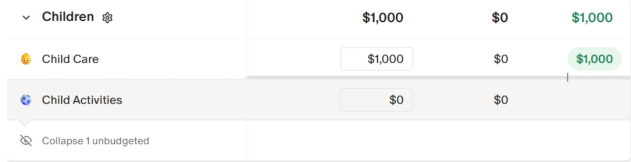
Monarch Pro Tip: Track your baby expenses down to the dollar so you know what to plan for. If you’re using a category budget, you can track your category and group for child-related expenses.

Child Care
As mentioned above, child care is one of the heftiest expenses for parents to cover in the first year. While full-time daycare is the most common route, many opt for other options such as relying on part-time day care, a nanny, or other options. Here’s the cost breakdown.
Daycare
Daycares often come with different prices for infants, since they have a higher required staff-to-infant ratio. Many daycares will have an application fee when you apply, so be sure to check beforehand.
Annual cost for full-time care (40 hours a week): $14,802
Nanny
A nanny is a household employee who will watch one or more of your children. This provides more direct attention for each child, as well as the flexibility of having the nanny come to your house instead of having to transport your baby to a daycare center. Nannies do tend to be on the more expensive side, with the average hourly wage being $23.61 as of 2026, according to UrbanSitter.
Keep in mind that you will also have to set aside payroll taxes, as your nanny will be considered a household employee.
Annual cost for full-time care (40 hours a week): $49,109
Nanny Share
An alternative to hiring a nanny for your own household is to participate in a nanny share, where two or more families share one nanny to care for several children. This splits the costs and allows for the benefits of having a nanny. Typically, families will split costs based on the number for children; for example, if three children participate in a nanny share that costs $60,000 per year, then one child’s care would cost $20,000.
Annual cost for full-time care (40 hours a week): $10,000 to $30,000, depending on number of participants
Insurance
While you’re likely already paying for insurance for your family, adding your child will increase your premium. You’ll also have the option to switch your plan upon the birth of your child, which many families use as an opportunity to switch to a lower deductible/higher-coverage plan should medical costs arise.
Either one of the child’s parents can opt to add the child to their insurance, giving you the opportunity to pick and choose if you have different plans.
Depending on your income, you may also qualify for a Children’s Health Insurance Program (CHIP), which allows you to insure your child with a government-subsidized premium.
Baby Supplies
These supplies will need restocking on a periodic level. If you have a subscription for a delivery or grocery service, you may be able to get a discount if you sign up for regular deliveries.
- Diapers and diapering supplies, like wipes and cream.
- Diaper cleaning service (if you’re using one)
- Medicines
- Lotions and soap
- Vitamins
Feeding
Your feeding costs will vary depending on if you plan on breastfeeding or using formula. As your child grows, they will need more calories, which means your costs could rise. Keep in mind that formula does qualify for WIC, so if you’re struggling with the cost, reach out to your local program.
Recurring costs include:
- Formula
- Breastmilk storage bags (if pumping)
- Baby food and/or ingredients
The 5 Biggest Expenses Worth Planning for
Don’t let these costs catch you by surprise.
Child Care
Child care is the number one biggest expense that most parents will face in the first year. On average, the annual cost of American child care in 2024 was $14,802, according to consumer group Child Care Aware. While this number will depend on where you decide to live or if you opt for full or part-time care, it can add up quickly.
Even if you can forecast how much child care will cost in the first year, it may cost you more than just daycare fees. If you decide to hire a babysitter for a night out, you can expect to pay about $20 per hour with a tip. If your daycare unexpectedly closes, you may need to hire someone last-minute. Take these expenses into account when budgeting out your month, and plan ahead so you can manage your financial situation ahead of time.
2. Lost Wages
While technically not an expense, lost wages will impact your budget and reduce the amount of money you have to spend and save. If one parent decides to stay at home with the baby or switch to part time, this results not only in lost wages for the time being, but future potential wages as career progression slows, alongside retirement contributions and other benefits.
The burden of lost wages tends to fall most on women. According to a Bankrate study, working mothers earned 35 percent less in wages than their full-time male counterparts in 2024. Even if mom isn’t staying at home, you may find that at least one parent may have to cut their hours or take unpaid time off to stay at home with a sick child or to provide child care when the daycare closes.
However your family decides to manage the balance between work and childcare, be sure to factor this into your budget. If you think it’s likely one parent will stay home, budget out not only your month-to-month cash flow and management, but also the long-term impacts to retirement and savings.
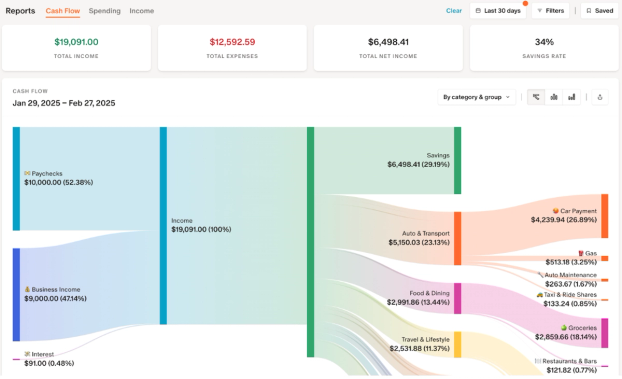
Monarch Pro Tip: Keep informed about how your spending will impact your budget ahead of time. Once you’re a few months in, Monarch’s spending reports can surface exactly where your baby costs are running over – down to the dollar – so you can adjust before it compounds.

3. Medical Expenses
Your baby’s health is a high priority. Since infants require special care, medical expenses can rack up quickly, especially if there are complications at birth that require a stint in the NICU. Even run-of-the-mill illnesses like the flu can quickly develop complications that can land your child in the emergency room.
Medical expenses don’t have to come from the emergency room, either. Your baby may require special care for walking therapy, feeding therapy, or a head shape corrector, which may not be covered entirely by your insurance. As well, medical care for the mother, such as postpartum care or a visit with a lactation consultant, can incur additional costs.
When reviewing your insurance, be sure to look at what’s covered and how much your deductible and out-of-pocket maximum is. You may want to bolster your emergency fund so it covers the out-of-pocket max, or bulk up your health savings account (HSA).
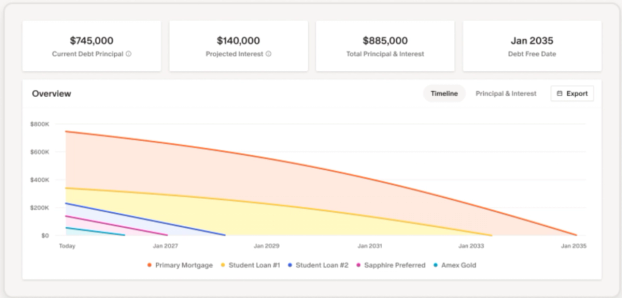
Monarch Pro Tip: Track your debts and balances so you never miss a payment. If you have a hospital balance that you’re paying down over time, or medical debt, you can set a Pay Down goal in Monarch to track your progress.

4. Housing
Housing costs tend to rise right before or after many parents have their first child, as they opt to rent a bigger space or buy a house in order to settle down.
According to the United States Department of Agriculture, 29% of parents’ pre-tax income goes toward housing. This is compounded by the fact that you may choose to move to a pricier area to be closer to family, to have access to a better school system, or to be near amenities such as parks and children’s activities.
When shopping for a house or an apartment, consider how much space you’ll need (both inside and in the yard), how close you are to your support systems, and if you’ll want to stay in the area for the next five years. While babies don’t need much space to start, as they grow, their and your housing needs will change, especially if you decide to have more children.
5. Emergency Purchases
Kids are unpredictable, and babies can really throw first-time parents for a loop. You may find yourself making a few unexpected purchases, such as rush-ordering a new sound machine when your old one breaks, renting a vibrating bassinet when baby won’t sleep through the night, ordering takeout for a week straight because you’re too tired to cook, or buying formula or pumping supplies because breastfeeding isn’t working out.
Giving yourself some wiggle room with these sorts of expenses is essential, as it can take the stress out of wondering if you’ll have enough money to cover both your child’s needs and the household needs. As such, it’s a good idea, on top of your standard emergency fund, to add an extra $100 to $300 per month to your budget to account for unexpected expenses. You can roll over this amount if you don’t end up using all of it for one particular month, which keeps your finances flexible.
Building a Baby Budget for the Year
Want to know exactly how your new baby will cost you? Here’s a month-by-month breakdown of what you can expect to spend, and how you can plan it out. Note that these are approximations based on average costs, with a bit of buffer room added in. Your experience may vary depending on your lifestyle, area of living, and individual choices.
Month 1
The first month comes with the most startup costs, between labor, delivery, and purchasing any last-minute gear that you may need. This also assumes you’ll need child care for the first month.
Labor, delivery, and medical | $2,854 |
Diapers | $75 |
Child care | $1,234 |
Formula | $150 |
Clothing | $50 |
Misc | $100 |
TOTAL | $4,463 |
Month 2
Diapers | $75 |
Child care | $1,234 |
Formula | $150 |
Misc | $50 |
TOTAL | $1,509 |
Month 3
By the time your baby is three months old, they may be ready for an upgrade to three-month clothes, though this will depend on their size and weight.
Diapers | $60 |
Child care | $1,234 |
Formula | $170 |
Clothing | $50 |
Misc | $50 |
TOTAL | $1,564 |
Month 4
Month four brings an important milestone: Introducing solids. You don’t need to buy out the entire baby food aisle, but your pediatrician will probably recommend starting to introduce purees in small increments. You can opt for store-bought, or, if you want to save some money, make your own. Your little one will still depend on milk or formula for most of their needs.
Your baby may begin teething at this point. Not only does this mean a lot of drool, but your little one will also feel discomfort and swelling in their gums. You can remedy this with freezable teething toys, topical, baby-safe numbing gel, or pain reliever like infant ibuprofen or acetaminophen.
Diapers | $60 |
Child care | $1,234 |
Formula | $170 |
Food | $14 |
Misc | $50 |
TOTAL | $1,528 |
Month 5
As your child approaches six months, it may be time to switch from a bassinet to a crib, as they may start to sit up on their own and approach the weight limit.
Diapers | $60 |
Child care | $1,234 |
Formula | $200 |
Food | $28 |
Crib | $150 |
Misc | $50 |
TOTAL | $1,722 |
Month 6
Month six is a big one, with another clothing upgrade and a developmental leap. Your baby will want more toys with sensory experiences including touch and sound, and books they can safely flip through.
Finally, your baby may be starting to crawl and become more mobile. This means you’ll want to start childproofing your home if you haven’t done so, including putting gates on stairways, covers on sockets, and locks on drawers and cabinets. You’ll also want to upgrade their wardrobe to account both for their newfound mobility and their growing size, and to buy more food as they expand their palate and burn more energy.
Diapers | $55 |
Child care | $1,234 |
Formula | $200 |
Food | $50 |
Clothing | $70 |
Misc | $50 |
TOTAL | $1,659 |
Month 7
Diapers | $55 |
Child care | $1,234 |
Formula | $180 |
Food | $60 |
Misc | $50 |
TOTAL | $1,579 |
Month 8
Diapers | $55 |
Child Care | $1,234 |
Formula | $180 |
Food | $80 |
Misc | $50 |
TOTAL | $1,599 |
Month 9
Your little one may be making moves toward their first steps. This is a good time to upgrade your childproofing setup, and invest in a walker or other walking-friendly toys. As well, it may be time for another clothing upgrade.
Diapers | $55 |
Child care | $1,234 |
Formula | $160 |
Food | $100 |
Clothing | $70 |
Misc | $50 |
TOTAL | $1,669 |
Month 10
Diapers | $55 |
Child care | $1,234 |
Formula | $160 |
Food | $120 |
Misc | $50 |
TOTAL | $1,619 |
Month 11
Diapers | $55 |
Child care | $1,234 |
Formula | $140 |
Food | $135 |
Misc | $50 |
TOTAL | $1,614 |
Month 12
As your child approaches their first birthday, not only is it time for another clothing upgrade, but you’ll also start approaching weaning them entirely from formula or milk. Your child care costs will also change after the first year, since your child will move from the infant to the toddler room.
Diapers | $55 |
Child care | $1,234 |
Formula | $140 |
Food | $175 |
Clothing | $70 |
Misc | $50 |
TOTAL | $1,674 |
While you don’t have to strictly keep to this budget, it can give you a helpful outline in terms of how you budget your little one’s expenses and what to account for.
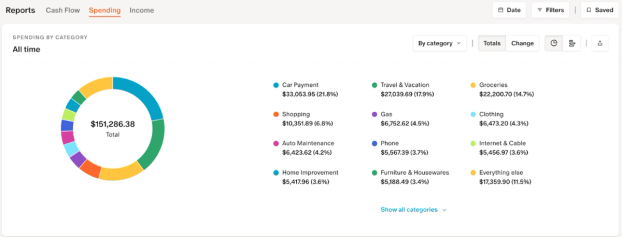
Monarch Pro Tip: After a few months, Monarch's spending reports will show your actual baby cost average per category — useful for recalibrating your budget as needs shift month to month. Monarch can generate reports based on your monthly spending and tell you what your averages are for each of your categories.

Long-Term Financial Moves Every New Parent Should Make
Making these moves now can pay off big-time in the long run for both you and your child. Prioritize these moves in order of the list; for example, if you don’t have an emergency fund in place, you’ll want to save the minimum amount before you start contributing to the 529.
- Have an emergency fund in place. An emergency fund is a vital lifeline when you’re facing an expected expense. At minimum, set aside $1,000. Ideally, you should have six months of monthly expenses saved up, or 9 to 12 if your income is irregular, or if your primary income is difficult to replace. Be sure to update your monthly cost-of-living calculations to account for the new baby.
- Sign up for long-term disability insurance. This will help support your family if you are no longer able to work due to disability.
- Review your will and estate plan. Ensure that not only your child is named a beneficiary of your estate, but that you have legal guardians set in place in the event both parents pass away.
- Get life insurance. Make sure your life insurance plan will cover for the expenses of your child and other beneficiaries, and make sure to add your child as a beneficiary.
- Take advantage of a Health Savings Account. A health savings account is a tax-advantaged way to save for approved medical supplies, including children’s medicine.
- See if your workplace has a Dependent Care Flexible Spending Account. An FSA allows you to save part of your pre-tax income to pay for child care.
- Start saving for your child’s education. An education savings plan like a 529 is a tax-advantaged way to save and invest for your child’s education. The earlier you start, the better.
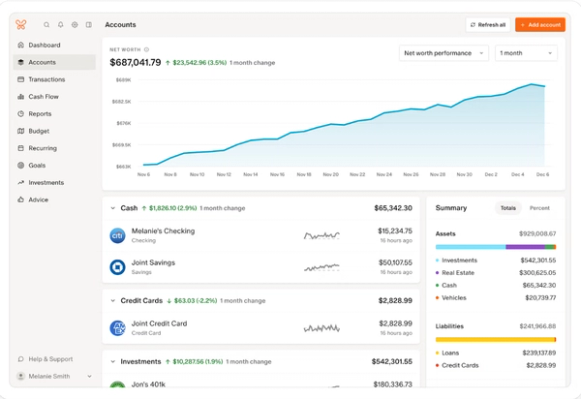
Monarch Pro Tip: Link all your accounts in Monarch to see your emergency fund, HSA, and 529 balances in one place — so you always know exactly where you stand.

Taxes and Benefits
There are a range of benefits available to families with children, from tax-advantaged savings accounts, to tax credits, to benefit programs. Here’s a quick overview of what’s available.
Tax Credits and Deductions
The government incentivizes family growth by offering tax breaks for kids. These include:
- The Child Tax Credit offers $2,200 per qualifying child, with phaseouts at $400,000 for those married filing jointly ($200,000 single filers). You may also qualify for the Additional Child Tax Credit, which offers up to $1,700 per child, depending on income.
- The Child and Dependent Care Credit qualifies you for 35%, or up to $3,000, of your child care expenses, with an additional $3,000 for your second child.
- Eligibility for the Earned Income Credit (EIC) if have three qualifying children or more and an income of $68,675 if filing jointly ($61,555 single filers).
- State tax credits and breaks, which vary depending on where you live.
When filing, be aware that to qualify for these credits, the child must be listed as a dependent on your taxes and live with you for at least half the year.
Tax-Advantaged Savings Accounts
These accounts allow you to save your pre-tax income, which reduces your taxable income and effective tax rate.
Educational Savings Accounts
There are a variety of savings accounts available for saving for your child’s education. The most popular ones include:
- A 529 is a tax-advantaged savings account that invests the funds you deposit in a set portfolio, allowing funds to grow over time.
- Coverdell Education Savings (ESA) accounts work similarly to 529s, but are only available for lower income earners.
- Roth IRAs, while not strictly a college savings account, can be used to save pre-tax income for a child’s future.
Anyone can contribute to a college savings account, making it a useful option for birthdays and gift-giving occasions. The earlier you invest, the better, as it gives your money more time to grow. If your child chooses not to go to college, most account types can be cashed out, transferred to a sibling, or converted to a non-education savings account.
Monarch Pro Tip: Check out our Education Savings Guide for a more in-depth look at how to save for your child’s future.
Dependent Care Flexible Spending Account
Dependent Care Flexible Spending Account is a tax-advantaged savings account that can be used to compensate child care providers, including daycares, nannies, babysitters, and even family helping out with child care.
Typically, it’s only available through your workplace as an employee perk, if your workplace chooses to provide one. You contribute from your pre-tax income and withdraw from it by filing a claim with your workplace’s FSA provider. The current yearly cap on contributions is $7,500 per year per household.
Assistance Programs
If you’re struggling with managing costs for diapers, formula, child care, or other necessities, these programs exist to help you and your family.
- Women, Infant, Children programs provide nutritional support in the form of formula, baby food, breastfeeding support, and other goods and services.
- Temporary Assistance for Needy Families (TANF) provides cash assistance and job support for eligible low-income families.
- The Children’s Health Insurance Program (CHIP) provides Medicaid to children if you are unable to qualify yourself, but cannot afford standard premiums.
- Early Head Start provides education and support services to pregnant women, infants and toddlers.
- Supplemental Nutrition Assistance (SNAP) benefits, which can help cover groceries, are available to eligible families, with benefits being based on family size.
- Section 8 housing benefits subsidize rent for eligible low-income families.
- State and local child care assistance programs that can offer subsidized rates for child care.
Plan Your Baby Budget With Confidence
Taking action on your family’s finances will pay off over your child’s lifetime. Monarch can help you plan out your baby expenses ahead of time, adjust your budget and your financial plan as your family’s needs change, and make informed decisions about your long-term trajectory by equipping you with the tools and resources to project your long-term cash flow and new worth growth.
From helping you track your 529 balances, to data-backed suggestions on how to adjust your budget categories, to step-by-step guidance on how to build wealth in the long run, Monarch is the platform that can help you build your family’s financial future.
FAQs
How much does a baby cost per month?
With child care, a new baby can cost about $1,500 to $2,000 per month. Without child care, costs range between $50 to $400, depending on whether you use formula, the cost of your favorite diaper brand, your area of living, and other factors.
How much should I save before having a baby?
On average, start-up gear and delivery costs will be about $9,000, not including the future cost of child care. It’s a good idea to budget out what baby gear you plan to get, how much you’re willing to spend and how much labor and delivery costs will be. As well, be sure to have a well-stocked emergency fund with six months of monthly costs saved up.
Is $1,000 a month enough for a baby?
It depends. On average, child care alone costs $1,234 per month for an infant, on top of costs for formula, diapers, and incidental expenses. You may be able to manage $1,000 a month if one parent stays home, you rely on child care part-time, or if you qualify for assistance.
What is the biggest expense when having a baby?
For most families, child care is the largest expense, costing between $1,000 and $1,500 a month per child for the average family.
When should I start financially preparing for a baby?
That will depend on your individual family. Many couples start saving as soon as they start planning to get pregnant. The earlier you save, the better off you’ll be.
What are the hidden costs of having a baby?
Child care, medical expenses, and unexpected extra costs are some of the biggest unexpected costs of having a baby. Be sure to add a buffer into your budget.