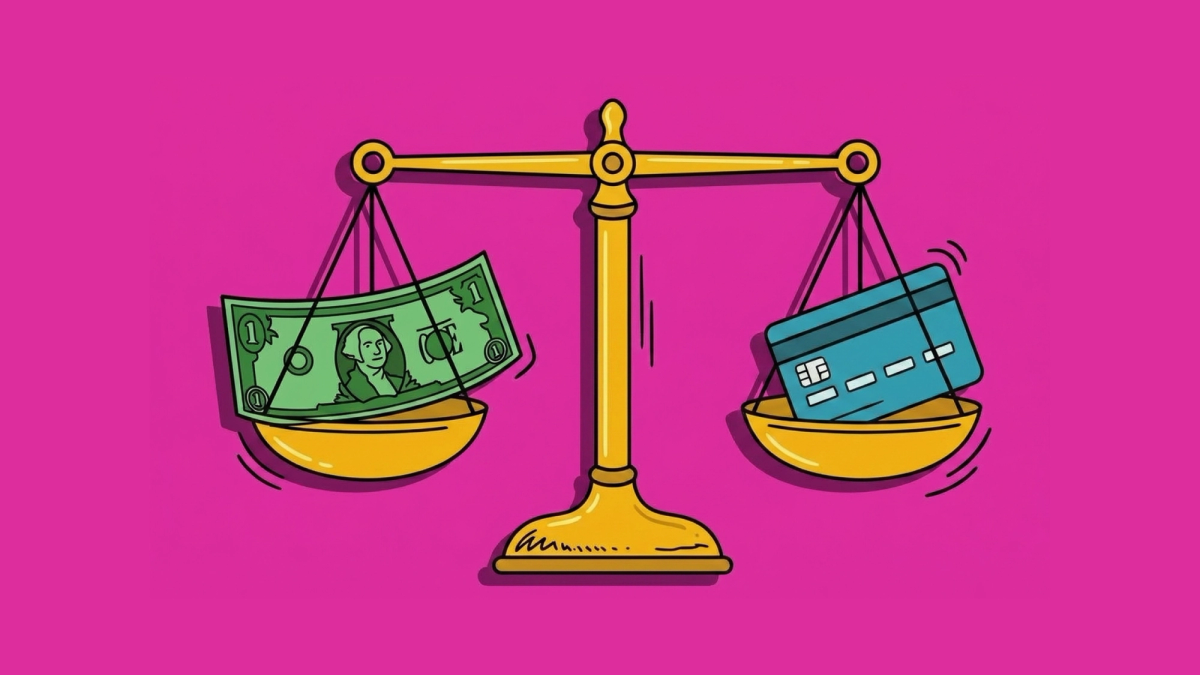
Used well, a credit card can be the best way to pay for the holidays. You get rewards, purchase protection, and fraud coverage that cash and debit cards don’t offer. The difference between “used well” and “used poorly” isn’t the card, it’s whether you’re tracking what you’re spending while you’re spending it.
Last holiday season, 37% of Americans went into debt for the holidays. That’s an average of $1,223 each, and is the highest amount since 2022. A massive 62% of the debt landed on credit cards. That’s according to LendingTree’s most recent holiday debt survey. Most of that debt wasn’t a simple mistake, it was planned spending but without a real plan.
Here’s how to collect the upside of holiday credit card use from the points, to the cash back, and the protections, all without carrying a 22% APR balance into the new year.
Key takeaways
- 37% of Americans took on holiday debt last season, averaging $1,223 per person, and 62% of it was spent on credit cards (LendingTree, December 2025).
- Rewards only “pay” if you pay in full. At the current average APR of 22.15% on accounts that carry a balance (Federal Reserve G.19, Q2 2026), one month of carried balance wipes out a typical 1-2% rewards haul.
- Set your total holiday number before Black Friday, and track spending against it in real time, across all of your cards.
- Skip store cards with deferred interest, and think twice before stacking a buy-no-pay-later plan on top of card balances you’re already carrying.
- If a balance does carry into January, attack it with an actual plan. Choose the avalanche or snowball, so this year’s gifts don’t become next year’s debt.
Is it smart to use a credit card for holiday shopping?
Yes, but with one condition: you have to know what you can afford to pay off. A credit card used for holiday shopping is a tool for collecting rewards and protection on purchases you were already going to make. It becomes a problem only when the spending outruns the plan. Here’s how to keep it on the right side of that line.
Set your holiday number first
Before you open a single Black Friday email, decide what the whole season is going to cost from gifts, to hosting, travel, and everything in between. The CFPB’s five step holiday spending plan starts here for a reason. A number you set in October is a clear boundary. A number you discover in January is a bill. The National Retail Federation puts average per-person holiday spending around $890 on gifts and seasonal items. This is a reasonable benchmark, but your household’s number should come from your own budget, and not the national average. If you haven't built out your holiday and gifts budget category yet, that’s a great first step.
2. Track spending in real time, across every card
This is where most holiday budgets quietly fail. You set a number in October, then spend it across three or four different cards over six weeks. If you have one card for the Black Friday deal, another for the category bonus, and a store card for the extra 20% off, by the time the statements arrive, nobody remembers what the running total actually was. A budget you check once isn’t a budget, it’s a forgotten memory. Seeing every card in one place, updated as you spend, is the only way to actually know where you stand mid-season instead of finding out in a later statement.
3. Match the card to the purchase the card to the purchase
Most rewards cards have rotating or fixed bonus categories including grocery, travel, online shopping, and department stores. Before you buy, check which of your cards earns the most on that specific purchase. It shouldn’t take long and could help you save a considerable amount. For a deeper look at whether chasing points is worth the mental overhead in the first place, see our breakdown of whether credit card points are actually worth it.
4. Use welcome bonuses only for spending you’d already do
A new card’s welcome bonus can be genuinely lucrative, but only if hitting the minimum spend doesn’t push you to buy things you wouldn’t otherwise buy. Experian’s holiday shopping survey found that 59% of consumers use credit cards for holiday purchases, and about a quarter actively evaluate their existing cards to pick the best one for the season. That second group has the right instinct in evaluating what you already have before opening something new.
5. Consider a 0% intro APR with a payoff deadline on the calendar
If you know you’ll carry a balance for a few months, a card with a 0% introductory APR can genuinely save you money, but only if you set a hard payoff date before the promotional period ends and the standard APR kicks in. Put that date somewhere you’ll see it and remember it.
6. Beware store cards and deferred interest at Black Friday checkouts
“Save 20% today” at checkout is one of the most expensive sentences in retail. Store cards routinely carry APRs above 30% and many use deferred interest. If you don’t pay the full balance by the end of the promotional period, you’re charged interest retroactively on the entire original amount, not just what’s left. Read the terms before you say yes at the register. Debt above 25% APR is so detrimental to your finances we recommend paying it off first, immediately, and aggressively.
7. Credit card vs. buy now, pay later – know the tradeoffs
Credit card | Buy now, pay later | |
Rewards | Yes, if the card offers them | Rarely |
Purchase protection | Often included | Usually none |
Impact if you miss a payment | Interest accrues | Late fees, and some report to credit bureaus |
Easy to lose track of | One statement | Multiple providers, multiple due dates |
Nearly half of holiday shoppers used a BNPL plan last year, per LendingTree’s data. The risk isn’t BNPL itself, it’s stacking several plans across several providers on top of card balances, so no single statement shows you the full picture of what you owe.
8. Use the protections you’re already paying for
Many credit cards include purchase protection (covers items that are damaged or stolen shortly after purchase) and extended warranty coverage, at no extra cost. For big-ticket gifts, that coverage is worth knowing about before something breaks in February.
9. Monitor your credit utilization throughout December
A big holiday balance, even one you plan to pay off in full, can spike your credit utilization ratio if it’s high when your statement closes. This can temporarily dent your credit score. Keeping an eye on utilization through the high-balance months, not just after the fact, is the only way to catch it before it shows up on a report. Track your credit score alongside your spending so December doesn’t surprise you.
10. Pay it off before the grace period ends
The single highest-leverage habit on this list is to pay your statement balance in full before the grace period closes. Do that, and every tip above is pure upside.
What’s the real cost of “I’ll pay it off eventually”?
Here’s what a carried holiday balance actually costs, using this season’s real average. Let’s say you put $1,223 on a card at 22.15% APR, the current average rate on accounts that carry a balance.
- Minimum payments only: it takes more than six years to pay off, and you pay over $900 in interest. This is nearly as much as the original balance.
- A 3-month payoff plan (about $420 per month): you pay it off by the spring, with roughly $45 in interest.
This is the same debt on the same purchases and the difference in interest is $855. If you want to try out this math with your own personal numbers, check out Monarch’s debt payoff calculator which will show you your actual payoff date at your balance and rate.
I overspent! What should I do in January?
If a balance carries into the new year, the worst thing you can do is nothing. Two proven approaches:
- Avalanche method: pay minimums on everything, then throw every extra dollar at the balance with the highest interest rate first. Mathematically, this saves you the most money.
- Snowball method: pay minimum on everything, then attack the smallest balance first, regardless of the rate. It saves less in interest but builds momentum through quick wins, which matters if motivation is the harder problem.
Neither option is wrong. The best you can do is choose an option that works for you and get rid of that holiday debt with a plan you can stick with. For a full walkthrough of both methods, see avalanche vs. snowball, and for a broader payoff framework, check out our guide on how to pay off debt.
How Monarch helps you enjoy rewards season without the debt hangover
The best holiday credit card strategy is one you can actually see. Most of the advice above depends on knowing, in real time, what you’ve spent. This is exactly where a six-week shopping season spread across three or four cards falls apart for most people.
Monarch gives your holiday spending a dedicated budget category, so you set the season’s number before Black Friday and watch it in real time as purchases land, not after the statements arrive. Because it connects every card in one place, you see the full picture of holiday spending as it happens. It also tracks the recurring subscriptions and minimum payments that quietly stack on top of gift spending every December, and lets you watch your credit utilization through the high-balance months instead of finding out after your score moves.
If a balance does carry into January, Monarch’s Pay Down Goals let you sort your debts by APR or balance and build an avalanche or snowball plan against your actual numbers. For households that manage finances together, both partners see the same holiday budget, so there’s no duplicate spending and no end-of-season surprise.
Rewards season, without the debt hangover
The holidays are about the people, not the payments. A credit card, used with a plan, lets you show up for both. The rewards and the protections on one side, a clear number you’re tracking on the other. Set the number and watch it as you go, and rewards season doesn’t have to turn into debt season.
FAQs
Is it smart to use a credit card for holiday shopping?
Yes, as long as you can pay off the balance before interest accrues. Used that way, a credit card adds rewards and purchase protection at no extra cost. Used without a plan, however, and it can turn into a 22% or more APR balance that outlasts the holidays themselves.
What is the average holiday debt?
About $1,223 per person last season, according to LendingTree. This is the highest average since 2022 and about 62% of that debt was carried on credit cards.
Are 0% APR credit cards a good idea for the holidays?
They can be, but only if you set a firm payoff date before the promotional period ends. Once the standard APR kicks in, it is often north of 20%. Any remaining balance starts accruing interest at the regular rate.
Is buy now, pay later better than a credit card for the holidays?
The answer depends on what you value. BNPL rarely offers rewards or purchase protection, and stacking multiple BNPL plans across providers makes it easy to lose track of what you actually owe. A single credit card, tracked closely, is often easier to stay on top of.
Does holiday spending hurt your credit score?
It can, temporarily. A large balance sitting on your statement when it closes, even one you plan to pay off in full, can spike your credit utilization ratio and dent your score for a cycle or two. Paying down balances before the statement closes can help avoid this.