Americans planned to spend an average of $778 on holiday gifts last season, according to a Gallup poll, and more than one in three began 2026 with an average of $1,223 of holiday debt, according to LendingTree. Start the new year off on the right foot with a no debt and balanced budget. Here are five concrete strategies to save on your holiday budget, and the numbers behind them.
Key Takeaways
- Americans planned to spend an average of $778 on holiday gifts in 2025, and 37% of shoppers ended the season with an average of $1,223 in debt.
- Planning your total gift budget ahead of time can help you prevent overspending and map out how much you need to save.
- Agreeing on a cap for gift amounts or expenses, or switching a traditional gift swap for a Secret Santa or white elephant exchange, can save you hundreds of dollars in gift budgeting.
- Make sure to track your expenses in real time across your household, so you and your partner can be on the same page about your spending and savings.
- BNPL or using your credit card balance to pay for gifts can translate into late fees and higher interest. Instead, trim your budget and pay in cash.
- Starting a fund as early as possible means you need to save less per month, and can take better advantage of interest rates and early shopping.
Set a total gift cap before you buy anything and split it per person
Setting a cap and building a budget before you start shopping will help you scout out which gifts you plan to buy, help you set a savings goal, and prevent you from going over budget.
There are a few ways you can calculate how much you should spend on holiday gifts. In 2025, American adults planned to spend $628 total on gifts alone for the holiday season, while households with children planned to spend $743, according to the National Retail Federation.
In terms of how much your household in particular should spend, aim for about 1% to 1.5% of your income. For example, on a $85,000 annual income, you would aim for about $850 to $1,275 gift budget total.
After figuring out your total, divvy out how much you would want to spend per person you plan to give gifts to. For example, let’s say you have a $600 gift total to work with, and an upcoming family gathering for the holidays.
Ava (Spouse) | $100 |
Morgan (Child) | $100 |
Agatha (Child) | $100 |
Keli (Infant) | $80 |
Ernest (Brother) | $50 |
Murphy (Grandpa) | $50 |
Gertrude (Grandma) | $50 |
Joe (Cousin) | $20 |
Fred (Cousin) | $20 |
Cecilia (Cousin) | $20 |
Scruffy (Dog) | $10 |
TOTAL | $600 |
Estimated savings: $200 to $400, depending on how much you typically spend per person
2. Shrink the list with a gift rule or exchange
If you’re exchanging gifts in a group, you can help everyone save on gift spending by setting a cap on gift or gift values, or creating an organized exchange that ensures everyone gets a gift.
Here’s a quick comparison of different ways you can exchange gifts without breaking the bank.
Gift rule | How it works | Per-person cost |
Per-person dollar cap | Set a limit on how much each person spends on gifts per person | $20 to $100, depending on the spending cap |
Per-person gift cap | Set a limit on how many gifts each person receives | $20 to $100, depending on the gift cap |
Secret Santa swap | Each person secretly buys one gift for one other person in the group, usually with a spending cap | $20 to $100, depending on the spending cap |
White elephant swap | A Secret Santa where group members can exchange and “steal” gifts | $20 to $100, depending on the spending cap |
Themed swap | A themed exchange where each gift conforms to a theme, such as handmade gifts only | $0 to $100, depending on the theme |
Group gifts | Each individual contributes a small amount toward a “big ticket” gift for someone else | $5 to $50 |
Estimated savings: Depending on the gift rules, $200 to $500.
3. Track spending in real time, together
Coordinating your spending and your gift-giving with your partner can go a long way to prevent holiday overspending.
During the chaos of the holiday season, if you aren’t on the same page, you can end up going over budget or duplicating gifts.
To start, sit down and discuss your holiday budget and how much you want to save, your budget caps, and your general gift and spending list.
When coordinating your holiday budget, have a single source of truth with accurate tracking of your spending and your gift list, like a shared document or a financial platform that tracks your purchases. If one of you is going on a dedicated shopping session, let your partner know how much you’ve spent and what gifts you have left to buy.
Estimated savings: $10 to $100
4. Pay cash, not later
While the Buy Now Pay Later button at the online checkout promises interest-free payments, relying on financing for your holiday gifts can cost you in the long run.
According to LendingTree, nearly half (47%) of BNPL users reported they were late with their payments, with 54% reporting they later regretted their purchases.
Missing a BNPL payment comes with penalties, with a $7 to $10 late fee per week of missed payment. Missing just one month of payments can cost you up to $40 in late fees.
If you use a credit card instead, you can be charged up to 36% APR on the balance. A $500 balance on your card at 25% APR can cost you $537 in interest on top of the original balance if you make only the minimum payment.
If you’re having trouble affording holiday gifts, it’s a much better idea to adjust your budget and your giving plans than to rely on borrowing. Consider making gifts by hand, switching to a swap instead of a traditional gift exchange, or offering to host for the holiday in lieu of giving presents.
Estimated savings: $40 to $500 in interest and late fees
5. Start next year's fund in January
While thinking about the holidays for the following year might be the last thing on your mind in January, saving early helps you save more. Starting your savings while you have the previous year’s budget numbers in hand gives you a concrete goal, and gives you more room for adjustments if you miss your savings target for the month.
If you’re keeping your savings in a high-yield account, you’ll also accumulate more interest. For example, let’s say you aim to save $1,200 by December for your holiday fund, which you’re keeping in a 4% APY savings account. If you start saving in January, you’ll only have to save $100 a month. If you start in July, you’ll have to save $200 a month, and if you start in September, you’ll have to save $300 a month.
Here’s how each account lines up with the savings timeline and accumulated interest.
Begin in January | Begin in July | Begin in September | |
January | $100.33 | - | - |
February | $200.99 | - | - |
March | $301.98 | - | - |
April | $403.30 | - | - |
May | $504.95 | - | - |
June | $606.93 | - | - |
July | $709.24 | $200.65 | - |
August | $811.89 | $401.96 | - |
September | $914.88 | $603.93 | $300.98 |
October | $1,018.20 | $806.56 | $602.95 |
November | $1,121.86 | $1,009.86 | $905.91 |
December | $1,225.86 | $1,213.83 | $1,209.85 |
Total interest earned | $25.86 | $13.83 | $9.85 |
Starting to save in January earns you nearly twice as much interest than beginning to save in July, and nearly three times as much as starting to save in September.
It also helps if you decide to do your holiday shopping early, which is becoming a popular way to save. Nearly one in five shoppers planned on buying gifts months before the holiday season, according to Accenture’s 2026 Holiday Shopping Survey. Having a sinking fund available can help you take advantage of early deals and discounts and avoid the last-minute rush.
Estimated savings: $25 to $200
How Monarch Helps You Spend Less on Gifts
Tracking your holiday savings and spending is a year-round activity, especially if you want to save and shop early. Monarch gives you the tools you need to track your spending, set up savings goals, and see your progress all in one place as a household.
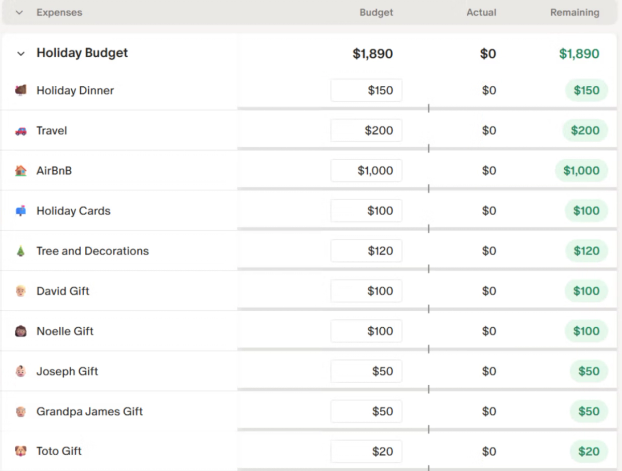
Setting up your budget ahead of time will help you stick to your limits and get a clear view of your spending. Monarch tracks your transactions in real time so you can see how close you are to your limits and manage your spending over the year.

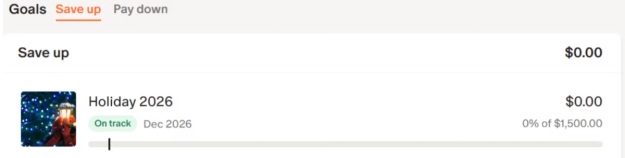
Watching progress on your savings goals will help you stay on track throughout the year. Monarch’s Save Up goal feature integrates your budgeted contributions and tracks the savings from your sinking fund right on your budget.

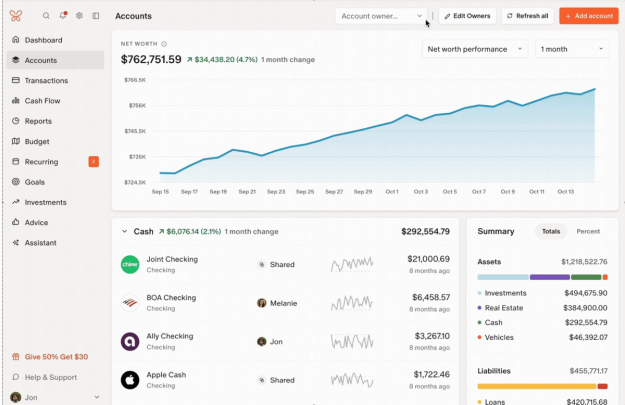
Budgeting as a household means you need visibility in one place. Monarch’s Household Views allows you and members of your family to track your household spending, savings goals, and holiday budget from their accounts, so you’re all watching the same numbers.

The bottom line
To pull a classic line from The Grinch: Christmas (and the holiday season) doesn’t come from a store. Ending the holiday season with a manageable gift budget, no debt, and knowing that you didn’t overspend is worth more than breaking the bank for holiday presents. Don’t wait until Black Friday; if you haven’t already, start planning out your gift budget and begin your savings fund, so you can make your holiday season a financially resilient one.
FAQs
Is $100 a lot for a Christmas gift?
That depends on your budget and income. As a rule of thumb, your overall holiday gift budget shouldn’t exceed 1% to 1.5% of your annual income, assuming you don’t have any urgent expenses and have a well-stocked emergency fund. From there, you can determine how much you want to allocate per person you plan on giving a gift to and see if $100 fits in your budget.
When should I start saving?
Save for your holiday fund as early as possible. Not only will saving earlier give you a lower per-month savings requirement, but it also will net you more interest on the account and allow you to shop earlier in the year.
Are homemade gifts actually cheaper?
It depends on how much the materials cost and how much you value your time. Homemade popcorn balls, for example, are relatively cheap and quick to make. A handmade wool sweater, on the other hand, can cost in the range of $100 to $400 in materials, as well as dozens of hours in time. As such, be sure to sit down and budget out how much a homemade project will cost you, see where you can save, and consider if it’s worth it.
How do I say no to a gift exchange?
Keep your answer short and to-the-point. “Thank you for inviting me, but I’m sorry, it’s not in the budget right now,” is polite and communicates why you can’t participate. If you want, you can offer to participate in non-monetary ways, such as hosting, providing cookies, or helping organize other activities.
Should I use BNPL for gifts?
It’s not a good idea. BNPL can often lead to missed payments and going over your budget. Instead, use the money you already have to pay for gifts, and focus on sticking to your spending limits instead of trying to beat the clock on your payment due dates.