
Health insurance and health costs are rapidly becoming the biggest line items on Americans’ budgets. The best health insurance plan, however, isn’t necessarily the one with the cheapest monthly cost. It’s one that allows your savings to absorb the worst-case scenario for costs.
In 2025, family health insurance cost an average of $26,993 in premiums, with the typical worker paying $6,850 out of their paychecks, according to the Kaiser Family Foundation’s 2025 Employer Health Benefits Survey.
Choosing a plan based on yearly costs, your deductible, and your out-of-pocket maximum comes down to cash flow and budget management.
Here’s how you can choose the best health insurance plan for your household and your financial plan.
What you're actually comparing: The five numbers on every plan
Reading through your insurance policy shouldn’t require a dictionary (though if you need a hand, our glossary can help). Here’s a quick breakdown of the five numbers that impact how much you pay for your insurance.
What it is | When you pay it | If it’s high, then… | If it’s low, then… | |
Premium | Your monthly insurance payment | Monthly | You pay more per month in exchange for a lower deductible and OOP, and more coverage | You pay less per month in exchange for a higher deductible and OOP, and less coverage |
Deductible | How much you pay before coinsurance kicks in | With each bill before you reach the limit | You pay more upfront before coinsurance kicks in, with a lower premium | You pay less upfront before coinsurance kicks in, with a higher premium |
Coinsurance | How much you pay for bills after your deductible | With each bill after you reach your deductible | You pay a higher percentage on your bills after you hit your deductible | You pay a lower percentage on your bills after you hit your deductible |
Out-of-pocket maximum | How much you pay before insurance covers all in-network costs | With each bill until you reach it | You pay more upfront before your insurance covers costs entirely | You pay less upfront before your insurance covers costs entirely |
Coverage | What costs and services your insurance helps pay for | N/A | More of your care is covered by insurance | Less of your care is covered by insurance |
Here’s each term in more detail.
Premium
A premium is a fee you pay your insurance provider on a monthly basis for coverage.
What it means for your insurance costs: Your premium sets the beat for your coverage and how low your deductible, co-insurance, and out-of-pocket maximum go. Higher premiums mean you pay less everywhere else, with a lower deductible, co-insurance, and out-of-pocket maximums.
Deductible
A deductible is the maximum amount of insurance-covered costs you pay per year before your insurance company starts to cover some of the costs.
What it means for your insurance costs: Higher deductibles mean you have to pay more of your own money before your insurance kicks in, usually in exchange for a lower premium.
Coinsurance
Coinsurance is the portion of your bills your insurance covers after you reach your deductible, usually in the form of a percentage.
What it means for your insurance costs: The higher your coinsurance, the bigger chunks of your bills you’ll have to pay out-of-pocket after you hit your deductible. A lower premium usually means your coinsurance is higher, and vice-versa.
Out-of-Pocket Maximum
The out-of-pocket (OOP) maximum is the maximum amount of your own money you have to pay for your covered costs per year, after which your insurance pays for covered costs entirely.
What it means for your insurance costs: Higher OOP maximums mean you’ll have to pay more up front before your bills start being covered, usually in exchange for a lower premium.
Coverage
Coverage refers to the costs and providers your insurance agrees to pay for.
What it means for your insurance costs: More coverage means your insurance pays for more services, usually in exchange for a higher premium. While Minimal coverage can get you a lower premium, it puts you at more of a risk for having to pay out-of-pocket for more specialized services.
What’s my Summary of Benefits and Coverage?
When you choose a health insurance plan, you’ll be provided with a Summary of Benefits and Coverage (SBC) that will outline what you can expect from your health insurance plan, including:
- Your monthly premium
- Your deductible
- Your co-insurance
- Your out-of-pocket maximum
- Your covered services and providers
Your SBC will change from year to year, so be sure to review it when deciding to change or stay with your insurance for the upcoming enrollment period.
What types of health insurance can I choose?
Depending on where you’re getting your health insurance, you have a few options to choose from. Here’s the breakdown of the different types of plans and plan structures, and what to expect.
How it works | Coverage | Cost level | Best for | |
HMO | You stick with one primary care doctor who refers you to specialists as needed. | Primary care, referred specialists, emergencies. | Low to medium | Those in need of mostly primary care without much specialist care |
PPO | You can see both in-network and out-of-network doctors and specialists without a referral. | In and out-of-network doctors and specialists, emergencies. | High | Those with high medical needs willing to pay more |
POS | You can see both in-network and out-of-network doctors and specialists, though out-of-network costs are higher and may require referrals. | Primary care, some out-of-network doctors and specialists, referred specialists, emergencies | Medium | Those looking for mostly primary care with some flexibility for out-of-network and specialist care |
EPO | Only in-network doctors and specialists are covered. | In-network primary care, specialists, and emergencies | Medium | Those looking for a low-cost option without need for out-of-network care |
HDHP | Your monthly premiums are low, but your deductibles are high. You’re often provided with an HSA to help you with savings. | Dependent on your plan | Medium | Those with lower health needs who can save through an HSA |
Here’s each plan type in more detail.
Health Maintenance Organization (HMO)
A Health Maintenance Organization has you stick with one doctor for more of your needs, known as your primary care provider (PCP). From there, your PCP can refer you to specialists, such as a gastroenterologist, as needed. With this plan, you’ll need a referral from your PCP for your insurance to cover the costs of seeing a specialist. Because of this, premiums tend to be on the lower end.
Best for:
Relatively healthy individuals who don’t need much specialist care and who are looking to save on monthly premiums.
Preferred Provider Organization (PPO)
A Preferred Provider Organization is the most flexible type of insurance plan, allowing you to see specialist and out-of-network providers without a referral, usually with higher costs than in-network care. In general a PPO will have a higher monthly premium in exchange for a higher level of coverage.
Best for:
Individuals in need of more specialist and out-of-network care on a regular basis.
Point of Service (POS)
A Point of Service plan mixes HMO and PPO rules, where you have a PCP who can refer you to specialists, and have your insurance cover some of your out-of-network costs. This can be a good way to get some of the flexibility of a PPO without paying as much in premiums.
Best for:
Individuals looking for a mix of flexibility and affordability in getting care and seeing specialists.
Exclusive Provider Organization (EPO)
An Exclusive Provider Organization (EPO) plan strictly limits you to in-network providers. Though EPOs tend to have a larger network of providers, this does heavily limit you if you need to see a specific specialist. Premiums tend to be medium low, usually falling between an HMO and a PPO.
Best for:
Individuals without the need for specific specialist care but who want a wider network than an HMO.
High Deductible Health Plan
A High Deductible Health Plan is a type of health insurance plan where your premiums are low, and your deductible is high. It can be applied to an EPO, PPO, POS, or HMO.
Many HDHPs offer access to a Health Savings Account (HSA), which is a tax-free, long term savings account you can use to pay for medical expenses, including hospital bills, doctor’s fees, prescriptions, and over-the-counter items. Because funds in an HSA roll over from year to year, some find it more affordable to save up to their deductible or OOP maximum, and then otherwise have lower premiums.
Best for:
Individuals who want to save a bit on their monthly premiums and contribute to an HSA for more flexible health spending.
How do you choose an affordable health insurance plan?
Picking a health insurance plan that fits your budget takes a bit of research and insight into your expected medical needs. Here’s what to focus on and how to calculate your expected insurance costs.
Step 1: Estimate next year's care
How much care you’ll expect to need for the year ahead is one of the most important factors in selecting a plan. As a rule of thumb, the less you pay on your premium, the more you can expect to pay for any medical services you use throughout the year, and vice versa.
To start, use last year’s usage as your baseline, and consider how much you paid before you reach your deductible/OOP (if you hit it at all.) Also consider any upcoming costs you can anticipate, including:
- Surgery or procedures
- Regular appointments
- Prescriptions
- Scheduled specialist visits
- Travel
- Pregnancy/childbirth
From this, build three different scenarios for how you’ll end up using your insurance:
- The good year. You stick to your PCP/in-network preventative visits and use your insurance fairly minimally.
- The moderate year. You have one big event or set of specialist visits that get you to your deductible, but otherwise a fairly normal year.
- The bad year. You have several major health events that require multiple specialist visits and long-term, ongoing care past your deductible and OOP maximum.
While it might seem like you’ll save money on premiums with a plan offering less coverage and a higher deductible, the numbers aren’t on your side. One in five (21%) of adults had at least one major medical expense in the prior year, according to the Federal Reserve’s Survey of Household Economics and Decisionmaking (SHED) for 2025, facing a median cost of $1,000 to $1,999.
Step 2: Calculate total annual cost, not premium
Health insurance costs extend beyond your monthly premium once you factor in out-of-pocket expenses. To get a good idea of your annual insurance costs, multiply your monthly premium by 12 and add your expected out-of-pocket expenses, capped at the OOP maximum.
To give an example, let’s compare two different health insurance plans across three different spending years.
Plan A is an HDHP with a $180/month premium, a $3,500 deductible, a $8,500 OOP maximum, 20% co-insurance and access to an HSA.
Plan B is a PPO with a $340/month premium, a $1,000 deductible, a $4,000 OOP maximum, and 10% coinsurance.
Here’s how both plan costs would work out over different levels of yearly medical needs.
Plan A
Healthy year ($500 in care needed) | Moderate year ($6,000 in care needed) | Bad year ($100,000 in care needed) | |
Annual premium costs | $2,160 | $2,160 | $2,160 |
Pre-deductible costs | $500 | $3,500 | $3,500 |
Co-insurance payments | $0 | $500 ($2,500 in remaining costs at 20% coinsurance) | $5,000 |
TOTAL | $2,660 | $6,160 | $10,660 |
Plan B
Healthy year ($500 in care needed) | Moderate year ($4,000 in care needed) | Bad year ($100,000 in care needed) | |
Annual premium costs | $4,080 | $4,080 | $4,080 |
Pre-deductible costs | $500 | $1,000 | $1,000 |
Co-insurance costs | $0 | $300 ($3,000 remaining costs at 10% coinsurance) | $3,000 |
TOTAL | $4,580 | $5,380 | $8,080 |
As you can see, Plan A works better for years with minimal insurance usage, but starts to lose the advantage when costs rise above about $3,000 of care. While a higher premium may mean you pay more month by month, having a lower deductible plan when you have one or two health events that have you pay less out-of-pocket sooner, often with better coverage.
Step 3: The affordability test
Calculations and comparison tables aside, which insurance plan you pick boils down to one essential question: If you needed to cover a big health event next month, could you pay the full deductible from your savings, without the need for a loan, a credit card, or payment plan?
According to the Fed’s SHED for 2025, 37% of American adults reported they would not be able to cover a $400 emergency expense with cash or its equivalent. In that same survey, 45% of adults lacked an emergency fund with at least three months of expenses saved.
For 2027, HDHP deductible minimums are $1,750 for self-only plans and $3,500 for family plans. A gap between your savings and your deductible can translate into a balance on your credit card, medical loans, or a long-term payment plan if you need more coverage for the year.
To avoid the medical funding gap, go by this rule: If your deductible is higher than your immediate savings, either go with a plan with a lower deductible or find a way to stock your fund before January. If you want to be extra careful, then save up to your OOP maximum. This is where an HSA can come in handy, since it’s tax-advantaged and rolls over from year to year.
Step 4: Check the network and the formulary before you decide
Before you commit to a health plan, be sure to check the network and formulary so you can stick with your favorite care providers, get any specialist care you need covered, and ensure your prescriptions are still covered. If you don’t, you run the risk of paying more out-of-pocket when you discover one of your providers is out-of-network.
To start, make a list of doctors you regularly visit or plan on visiting and cross-check your plan’s directory. Be sure to check not only the doctor’s name, but also the medical group they’re with and any third-party facilities they use for scans or testing. Also be sure to visit the directory itself, and not the insurance marketing page or unofficial channels.
Also, keep an eye out for communication from your providers about insurance negotiations. Sometimes, later in the year, a practice will choose to discontinue accepting your insurance.
Then, check your prescriptions in your insurance’s drug list (formulary) including:
- The tier
- Expected copay
- Accepted pharmacy networks
- Whether prior authorization is needed
- Whether you’ll need to use the generic version first
- If mail-order is available
Making the most of HSAs and FSAs
HSAs and flexible spending accounts (FSA) are a great method for saving up a medical emergency fund in a tax-advantaged way. They also can be a good way to make up for the deductible gap, allowing you to save up to your deductible and make up for a higher deductible threshold.
Here’s a quick breakdown of the two types of medical expense savings accounts.
Health Savings Accounts | Flexible Savings Accounts |
Offered with an HDHP; Tax advantaged; Funds roll over year to year; Funds can bear interest or be invested | Offered by an employer; Tax advantaged; Funds forfeited year to year; Funds do not bear interest and cannot be invested |
HSAs
HSAs are health savings accounts that typically come with an HDHP, allowing you to pay for qualified medical expenses, including medical services, copays, prescriptions, and certain over-the-counter medications and home care items.
HSAs are triple tax-advantaged. You contribute your pre-tax income, any growth from investment or interest is tax-free, and withdrawals to pay for qualified medical expenses are tax-free. Depending on your plan, you can also invest the funds. The funds also roll over from year to year, allowing you to save any funds you didn’t spend.
There are contribution caps, however; for 2027, the limits are $4,500 for self-only accounts and $9,000 for families across the board (not just per account), with an additional $1,000 catch-up for individuals over 55.
Additionally, you can only contribute to an HSA if you have a qualifying HDHP plan, are not enrolled in Medicare or Medicaid, and do not have a medical expense FSA. However, in 2026, Bronze and Catastrophic Marketplace plans will offer an HSA, as are Direct Primary Care Service Arrangement (DPCSA) plans.
FSAs
Like HSAs, FSAs are tax-advantaged and are used to pay for qualified medical expenses. However, there are a few key differences.
FSAs are offered separately from an insurance plan, usually through an employer.
The funds are typically forfeited at the end of the year, though some employers may offer a grace period and carryover options.
Employers may also offer a contribution match, though the funds themselves cannot be invested and don’t bear interest. The contribution cap for an FSA in 2026 is $3,400 for both individuals and families, meaning it doesn’t scale like an HSA does.
Which savings account should I choose?
Whether you go with an HSA or an FSA to save for medical expenses, consider your circumstances and your anticipated medical needs.
Go with an HSA if:
- You have access to one through an HDHP or qualifying Marketplace plan
- You want to save long-term
- You don’t have a good idea of what your medical expenses will be
- You want to invest your savings
- You want to save more than the FSA cap
Go with an FSA if:
- You don’t have access to an HSA
- You have a major planned expense coming up
- You have a good idea of how much you’ll need out-of-pocket
How much should I save in an HSA or FSA?
As a baseline, save up to your deductible, which will allow you to pay for the bulk of your out-of-pocket expenses before your coinsurance kicks in. This should be savings in addition to your emergency fund, not a replacement of it.
Afterward, if you have extra funds, save up to your out-of-pocket maximum, which should cover most of your expenses before your insurance starts paying entirely.
Beyond that, consider investing your funds in a brokerage account or putting them toward other goals.
Should my spouse and I be on the same health insurance plan?
If you’re married, you can enroll in your own insurance plan or join your spouse’s, giving you more options for your health coverage. Before you decide, there are a few factors to consider.
When you join a spouse’s plan, the shared premium will increase. Your plan will also have a household or family deductible, with all qualified out-of-pocket expenses incurred by plan members counting toward it.
Some plans may have an individual deductible for each enrolled member, known as an embedded deductible, on top of this, where if you hit your individual deductible, insurance will start paying out for the individual.
As such, consider what your out-of-pocket expenses will be with a combined deductible and premium, as well as the coverage offered. While joining your partner’s plan may offer a cheaper premium, it may mean you lose coverage or pay more toward your deductible before insurance kicks in.
When you have to decide on an insurance plan
You can only choose your insurance plan during the open enrollment period, which is toward the end of the calendar year, or for a certain window after qualifying events such as unemployment, marriage, or the birth/adoption of a child.
The timeline for enrollment depends on the plan type. For employer plans, the window is usually October through November for coverage in the following calendar year.
For the Health Insurance Marketplace, opening dates will vary by state, but usually will fall between October and November 1. The deadline to enroll is December 15 for guaranteed coverage on January 1, though this varies by state. Be sure to double-check your state’s Marketplace sites for the definitive final date.
Otherwise, you can enroll in or change your plan for 60 days after a qualifying life event, including:
- Marriage or divorce
- Birth/adoption of a child
- Loss of health insurance due to a job loss/change
- Loss of qualification for Medicare, Medicaid, or CHIP
- Turning 26 and losing coverage through a parent’s plan
- Losing coverage through a student or university plan
- A death in the family
- Change in residence
- Change in income
- Becoming a U.S. citizen
- Leaving incarceration
- Gaining membership status in a federally recognized tribe
- Starting or ending service as an AmeriCorps member
How Monarch helps you decide
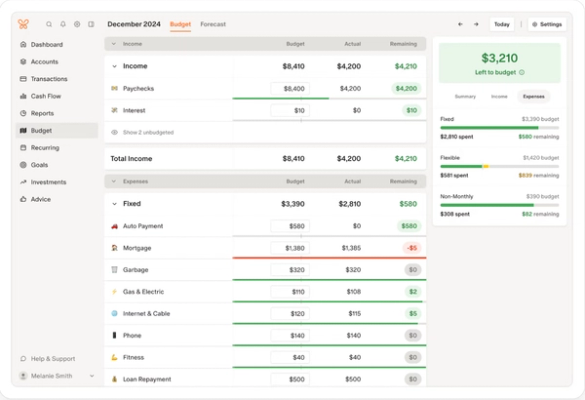
Figuring out if you can cover your deductible and out-of-pocket maximum requires you to know your cash flow, your savings, and your month-to-month spending so you can set your saving goals. Monarch gives you transparency into your money picture so you can see how much money you actually have, and plan ahead with real numbers instead of estimates.
When choosing a plan, you can model out the impact of your premium on your budgets for the year ahead by editing your expected take-home income, comparing it to your expected expenses and savings.

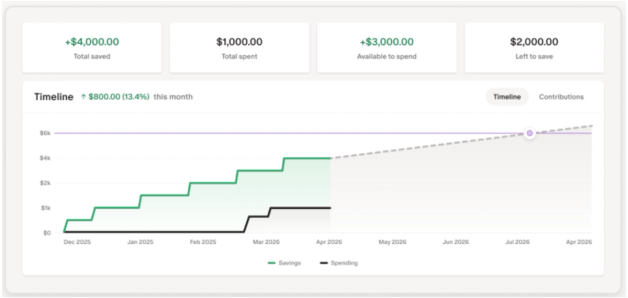
To get a clear picture of your savings, you can set your deductible reserve as a Save Up goal so you can track your progress, linked either to a savings bucket or to an HSA account. If you’re budgeting with a partner, you can use Shared Views to see where your progress lies, while keeping your income streams separate if you’re on separate plans or deductibles.

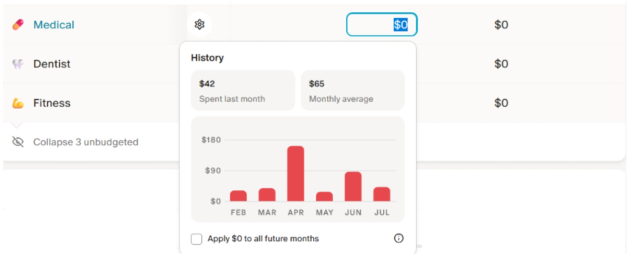
If you want to get an idea of your medical expenses for the year, you can look at Monarch’s suggested budgeting amounts based on your average expenditures by hovering over the edit option on the budget category.

Choose the plan that survives a bad year
When it comes to health insurance, the plan that helps you afford a bad year is the right plan for your family. Looking beyond the premium, calculating your annual costs with real numbers, and keeping your deductible in reach of your savings, you can avoid medical debt and make the most of the coverage you purchase without breaking the bank.
FAQs
Is an HDHP worth it?
A high deductible health plan can be worth it if you have a relatively low need for healthcare, and can afford the “deductible gap” with savings in an HSA. These plans can be helpful if you plan on putting the savings from the lower premium in your HSA, which can give you a longer runway for year-over-year savings.
What happens if I don’t pick a health insurance plan?
If you don’t enroll in a health insurance plan by the deadline, you run the risk of forgoing health insurance for the following year, which means you’ll have to pay for medical costs out of pocket. While some employer plans and any Marketplace plans will automatically re-enroll, be sure to double-check. You can also see if you can enroll in a plan with a qualifying event during the year, or if you qualify for Medicare, Medicaid, or CHIP.
Can I change plans mid-year?
You can only change your health insurance plans for a certain window after a qualifying life event, such as the birth or adoption of a child, marriage or divorce, or a change or loss in employment. If you do choose to change your plan, your deductible and out-of-pocket maximum will be reset.
Should my spouse and I be on the same plan?
That depends. If you find that one plan offers better coverage, a more affordable premium, and a combined deductible you can pay for out of savings, it might be a good option to be on the same plan. Be sure to compare plans and ensure that the one you pick covers your preferred providers, prescriptions, and specialists.
What do I pay first, my deductible or my out-of-pocket maximum?
Your deductible will hit first, but what you contribute overall goes to your out-of-pocket maximum.
When you start a new plan, in-network out-of-pocket expenses will count toward your deductible.
For example, if you have a procedure that costs $1,000 where you pay $200 and your insurance pays $800, then $200 will go toward your deductible. After you hit your deductible, you’ll start only paying a fraction of your medical costs, known as coinsurance. For example, with 10% coinsurance, you’ll only pay $100 on a $1,000 surgery. Whatever you pay on your coinsurance contributes to your out-of-pocket maximum on top of what you paid into your deductible.