
Over one in four (26%) Americans report that they’re spending beyond their means, with only 46% having an emergency fund that would cover three months’ worth of expenses, according to FINRA’s National Financial Capability Study.
If you feel like your spending and your household clutter have gotten out of control, then the minimalist lifestyle might be for you. A minimalist lifestyle is about focusing your attention, energy, and money on the things that truly matter to you.
Done right, minimalism can save you money in the long run, and help free you from the cycle of overspending and overconsumption that keeps you trapped in physical and mental clutter. Here’s how the mindset shift behind minimalism can help clean your house and your budget.
What is a minimalist lifestyle?
Minimalism is living intentionally with the things that add joy and purpose to your life, allowing you to live without unwanted clutter and focus your attention, time, and money on what you truly need. In a world that feels rife with overconsumption, overspending, and clutter, minimalism can feel like the answer for a simpler, more affordable, more purposeful lifestyle.
Minimalism revolves around three core tenets: Intentionality in your choices and lifestyle, clarity about what your wants and needs are, and freedom from the pressures of consumerism. Your purchases revolve around an essential question: “Is this something I truly need and want in the long run?”
This isn’t to say that minimalism is about living in deprivation or poverty. While you could hypothetically live in a cave and eat only protein bars, minimalism is more about living and cultivating the lifestyle you want, instead of the lifestyle that the latest trends, social media, or advertisers say you should have, or intentionally depriving yourself of the things you enjoy to save money.
As minimalism influencer Joshua Becker says in his book The Minimalist Home: “Minimalism isn’t about removing things you love. It’s about removing the things that distract you from the things you love.”
Does minimalism actually save money?
Minimalism can be a solid framework to help you save money and structure your lifestyle around spending within your means. The key part of making it work is creating a budget that fits within your lifestyle.
Here’s an example of how a minimalist budget lines up against the 2024 BLS annual baseline of $78,535 per household, assuming a household size of three people (two adults and a child.) (Note that this table only makes general assumptions about what minimalism can influence in terms of day-to-day costs, and isn’t necessarily a 1:1 representation of minimalist household spending.)
The minimalist household assumes:
- A two-bedroom house at the average price of $265,738 with a monthly payment (taxes and insurance included) of $1,868, according to Zillow’s Housing Data Study, and $300 monthly for utilities ($4,200) for a total of $2,168.
- One used car with no payment and an average mileage of 12,200 per year, per the Federal Highway Administration, with gas at $3.90 and 31 MPG for a compact car ($0.13 per mile, or $1,586 total) and $100 for insurance and maintenance monthly for a total of $1,686
- A thrifty food plan based on the USDA’s data for one adult male, one adult female, and one child for $187 per week
- One movie per month (at $15 per ticket for three people), one outing at an amusement park per year (at $75 per ticket for three people) with no subscriptions
- A clothing budget of $100 per month
- Miscellaneous expenses, personal care products, and alcohol expenditures reduced by half
- Healthcare, insurance, pensions, and cash contributions remain the same
- Household does not smoke
- Household uses the library in order to minimize book and reading material purchases
Average | Minimalist | |
Housing | $26,266 ($2,189/month) | $26,016 ($2,168/month) |
Transportation | $13,318 | $1,686 |
Food | $10,169 | $9,724 |
Personal insurance and pensions | $9,797 | $9,797 |
Healthcare | $6,197 | $6,197 |
Entertainment | $3,609 | $765 |
Cash contributions | $2,292 | $2,292 |
Apparel and services | $2,001 | $1,200 |
Education | $1,569 | $1,569 |
Miscellaneous | $1,218 | $609 |
Personal care products and services | $978 | $489 |
Alcoholic beverages | $643 | $322 |
Tobacco products and smoking supplies | $352 | $0 |
Reading | $125 | $0 |
TOTAL | $78,535 | $60,666 |
By this breakdown, a committed minimalist household can save around 23% ($17,869) on their household budget per year, which you can dedicate to high-priority goals like paying down debt or building your emergency fund, or for discretionary uses like saving for a vacation.
While your exact numbers may vary, adjusting your lifestyle can help you save more and budget more intentionally.
Where does minimalism not save money?
While minimalism might seem like an easy fix, there are some downsides to consider.
The quality vs quantity conundrum
Truly living the minimalist lifestyle can mean that your purchases are more expensive, since you’re focusing on quality over quantity.
For example, if you need a new pair of boots, buying the cheapest pair for $10 over the $100 pair may seem like the most frugal, minimalist option. However, if you have to buy a new pair every month because the $10 pair keeps falling apart, over a year you’ll spend more on boots than if you bought the $100 pair in the first place, and have created the clutter of 12 worn-out pairs of boots.
The emotional labor of decluttering
Decluttering isn’t always easy, especially when deciding to go through items you’ve had for a long time or were given as a gift. Household organization consultant Marie Kondo recommends the practice of “thanking” each object you choose to discard or donate to give yourself emotional closure as you declutter.
Managing social expectations
Living a minimalist lifestyle can come with social difficulties. Managing the expectations of friends and family with gift-giving and group activities can be a delicate balance, especially if you have grandparents who like to go overboard with toys around the holiday season, or friends whose idea of a good time is a shopping spree.
The key to this is setting gentle boundaries by encouraging your network to keep a cap on the gifts and focus on more experience-based get-togethers, such as a family dinner or visiting the zoo, instead of an avalanche of presents or hitting up the mall.
The influencer trap
Minimalism influencers, paradoxically, monetize minimalism by advertising their lifestyle and selling products related to minimalism, such as organizers, calendars, books, and gear that promise to make decluttering a breeze. Minimalism, however, isn’t a kit you can buy online — it’s an intentional lifestyle choice that requires a mental pivot and intentional changes in how you live your life and make purchases.
The mindset shift
Minimalism isn’t a magic wand that will instantly fix your spending and make you happier. It requires a long-term mindset about intentionally creating the life you want, which starts before your first declutter session or buying your first organizer. Long-term, it can take a lot of time, effort, and mental energy.
Also, for some individuals, minimalism isn’t a lifestyle they truly enjoy. If you prefer a bit more clutter in your life over the effort it takes to live the minimal way, that’s okay. You can still manage your budget and keep your spending intentional while living your life the way you want to.
The mental health case for minimalism
Minimalism and improved mental health go hand in hand, especially when you use it to improve your budget and manage your spending.
A 2023 study found that minimalism improved subjects’ mental health, offered them more fulfillment in their lifestyle, simplified their day-to-day routine and encouraged community through resource sharing (such as carpooling).
Another study found that minimalism had a direct impact on people’s financial well-being, with participants reporting that they pursued a more financially and materially sustainable lifestyle, spent less on material goods, and had an easier time avoiding unneeded spending and making more conscious choices with their budget and purchases.
With 77% of Americans feeling anxiety over their financial state, according to a study by Capital One, embracing a minimalist mindset can help you free up money in your cash flow, allowing you to build up an emergency fund and give your month-to-month budget some breathing room.
Also, minimalism can help you tackle financial and psychological clutter. Instead of having to juggle bills, debt payments, and money worries every week, a minimalist budget encourages you to simplify your finances and keep yourself focused on just a few things for maximum impact.
5 practical steps to start a minimalist financial life
Setting up your minimalist lifestyle doesn’t have to involve buying a pile of organizers or painting all your walls white. Here’s a practical walkthrough for getting started.
Step 1: Decide what matters most to you
Before you buy your first organizer, start a budget, or begin to declutter, the first step toward minimalism is deciding what’s truly important in your life. As mentioned above, you don’t have to throw out all your worldly possessions or try to live on a grocery budget of $50 a week. Instead, list your top five priorities in life (eating well, having a space you like living in, maintaining your yard/garden, providing fun experiences for your kids, retiring early, etc.) and focus on those, using it as a baseline for what can stay and what can go.
Step 2: Run an expense audit
If you haven’t been keeping track of your expenses and cash flow, now is the time to do it. Using a financial planning tool like Monarch can help you automatically track and sort your month-to-month spending, allowing you to see where your money is going, how much (if any) you’re saving, and where the biggest drains on your finances are.
Once you have your transactions in one place, figure out where you can start cutting your spending. For a minimalist lifestyle, shopping is one of the biggest cuts, especially if you’re looking to reduce clutter and start downsizing. Eating out is another one, especially if you’re using it to replace cooking at home on a regular basis. As you pare down your expenses, ask yourself the essential minimalist questions: “Does this truly matter to me?”
Another key way to start reducing expenses is cutting out subscriptions. Run a search on your listed transactions for recurring transactions and see how much you’re spending. Then, determine if the subscription is truly useful to you, and if there are any free alternatives you can replace it with (like getting movies from the library, opting for standard shipping instead of a rush delivery subscription, or cooking food at home instead of getting a food delivery subscription.)
Step 3: Apply the "one in, one out" rule for purchases
The rule is simple: For every new, non-consumable object you bring into your house, another object of the same type you already own has to leave. This can apply to books, furniture, toys, clothes, or anything you’re trying to keep a cap on in your household.
The 30-30 rule
The 30-30 rule, recommended by the author group The Minimalists, has you wait 30 hours before making a single purchase over $30 (or 30 days for purchases over $100) which helps put a cap on impulse purchases.
Step 4: Create an intentional spending plan
As mentioned above, intentional spending isn’t about living on the bare minimum. Intentional spending is ensuring that you have a plan for every dollar that you earn, and that your money doesn’t go to impulse purchases or things that won’t help you or make you happier in the long run.
There are a few budgeting frameworks for this.
- Zero-based budgeting has you plan where every single dollar you spend goes, from saving to expenses. While this can be work-intensive, it creates a highly intentional budget that reduces loose expenses.
- Category budgeting creates a general framework of how you want to sort your expenses, creating limits for each category and allowing you to plan out and manage your spending in each category.
- Flex budgeting has you prioritize fixed expenses, such as housing expenses, debt repayments, and savings, leaving the remainder of your income for more flexible expenses to use at your discretion. This can help you create a structured budget with your fixed expenses, while giving you some wiggle room for the expenses you want more wiggle room on (such as paying for experiences or “splurge” expenses)
No matter which budgeting method you choose, the key thing to remember is to have clarity where and how you want to spend your cash. You don’t have to reduce every non-essential expense to $0 or commit to a bare-bones grocery budget. Instead, set out with a realistic amount for how much you want to spend on something for the month, and stick to that throughout.
Step 5: Redirect freed-up cash toward a specific financial goal
Once you’ve pared down your expenses and created a more intentional spending plan, you can start directing your extra cash toward the things in life that actually matter to you, like saving up for a house, paying off debt, or saving up for a big purchase that brings you joy, like a vacation.
Staying intentional in how you save will help you stay on track and keep your budget aligned with the minimalist mindset. When creating your savings goal, make your contributions a priority by setting up an automatic transfer or a direct deposit from your paychecks so that you aren’t tempted to dig into your savings stream.
How Monarch helps you track a minimalist budget
Intentionality and clarity in your budget requires the right framework. Monarch helps you create a budget and financial plan that tracks your spending and saving in a way that gives you a clear picture of where your dollars are going — and ways to stay on track with your intentional lifestyle.
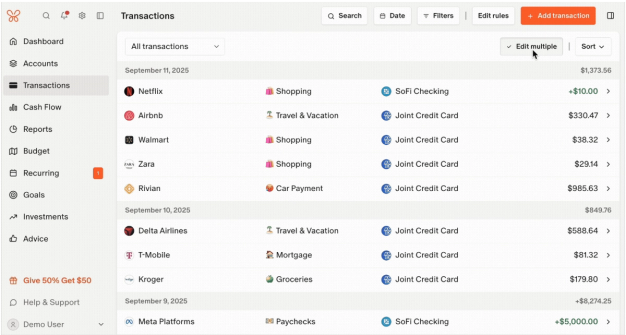
Clear financial visibility is key to spending intentionally. Monarch shows you your transactions and account balances all in one place through your linked accounts, so you can track your expenses, bills, and savings all on one screen.

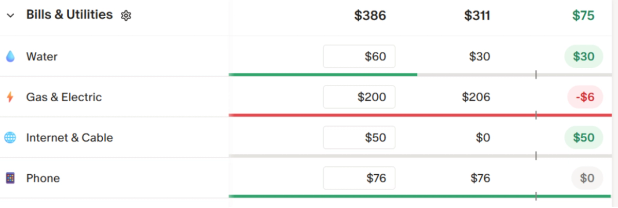
Simplifying your budget while creating a framework that works for you is core to staying successful with your minimalist lifestyle. Monarch gives you options for budgeting so you can customize your financial plan. If you’re keeping to a zero-based budget, Monarch’s category template helps you zero out your income and keep a cap on spending.

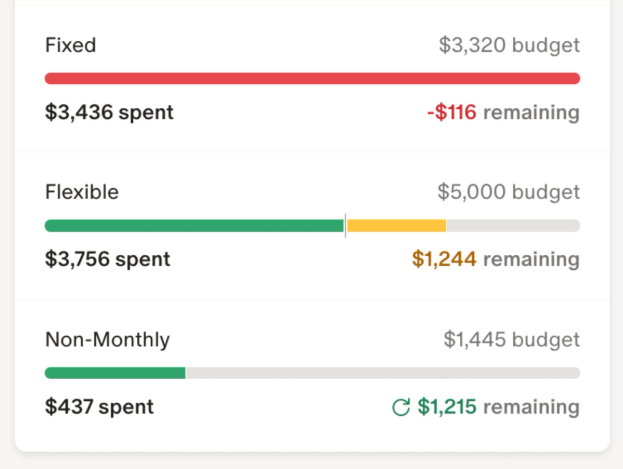
For a more simplified take, Flex budgeting keeps your spending to one number.

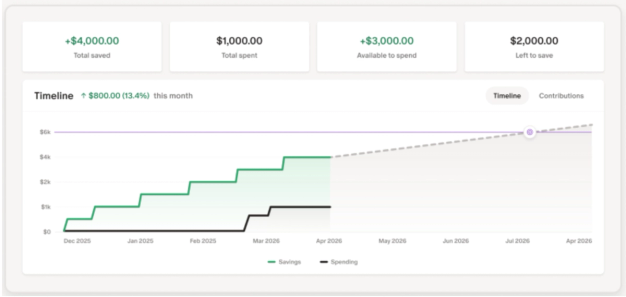
Tracking your savings sets you up for success when managing your spending, and gives the money you save a purpose. Monarch’s goal tracking ties your savings into your monthly budget and lets you watch your progress as you contribute.

If you’re looking to audit your recurring expenses (which is crucial for paring down your subscription spending) Monarch can give you insight on your recurring bills and flags them automatically if there’s an increase in price.

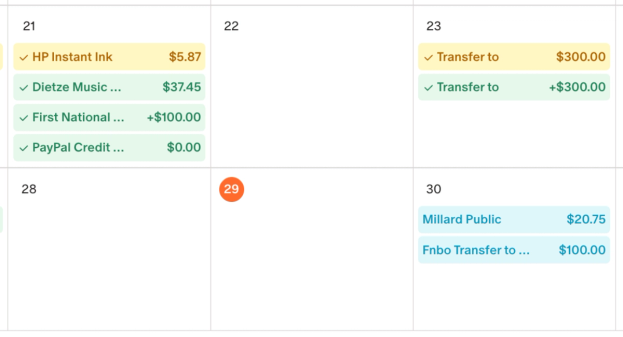
Monarch offers the full financial picture and takes your minimalist mindset beyond merely budgeting. Instead, it helps you create a top-to-bottom financial plan that fits your lifestyle, without clutter or ads to distract you from what matters the most financially.
Keep the money, cut the clutter
Embracing minimalism can, in the long run, save you money — so long as you focus on changing your mindset around spending and focusing on what matters to you in life. Minimalism goes beyond hiring decluttering consultants, buying expensive capsule wardrobes, or painting your living room white.
Instead, it’s about making conscious decisions with your spending and lifestyle that give you the freedom to say “no” to unimportant things, freeing up your money to save for and spend on what matters most. With Monarch, you can gain clarity on your spending, track your saving, and build a minimalist budget that works with you without the clutter of doing it by hand.
FAQs
Is minimalism just for rich people?
Just the opposite. Minimalism can help you simplify and reduce your spending, making your finances more manageable and allowing you to save more. While the minimalism aesthetic is being embraced by the upper class, reducing your expenses, reducing clutter, and making sure to spend money on what matters most to you can be done by anyone.
Can families with kids be minimalist?
Absolutely. In fact, studies show that kids with fewer toys display better-quality play, have longer attention spans, and have less stress with a more clutter-free environment. Many parents live a minimalist lifestyle with their kids by encouraging sharing, having children share a bedroom, limiting toys, and focusing on experiences such as going to the library or playing in the park over material possessions.
What's the first step to becoming a minimalist?
The first step is switching your mindset and deciding on what truly matters to you and what you want to prioritize in yourself and your life. From there, you can start gaining clarity about what you want and what you don’t want in your life (and your spending habits) and figure out what stays and what goes.
Is a minimalist lifestyle boring?
Only if you want it to be. Many minimalists, once they’ve gotten their material possessions under control, decide to focus their money on experiences over stuff, such as going on vacation, attending family outings, or creating memories in and out of the home without the need for excess clutter.
Does minimalism mean I can't spend money on things I enjoy?
Not at all. In fact, by diverting your money from buying “stuff” that doesn’t truly bring you enjoyment, you can instead focus it on the things you truly enjoy, whether it’s your dream vacation, maintaining your house and yard, curating your movie collection, or spending more quality time with your friends and family.