
Raising a young child can cost families $31,000 in the first year alone, with the average U.S. household spending $6,545 a month in 2024, according to the Bureau of Labor Statistics (BLS). Building a budget that can handle your month-to-month expenses, irregular costs like sports fees and camp admission, and unexpected expenses (a chipped tooth on the playground, anyone?) will go a long way to fostering your family’s financial resilience.
Staying ahead of your costs doesn’t have to mean counting every penny or getting overly strict about your spending. Managing visibility across multiple expenses and household members doesn’t have to be complicated; it just takes a little planning. Here’s how to do it.
Key Takeaways
- A family budget is a spending plan for your entire household, including shared costs, family expenses, and child-related costs like daycare, education, and kids’ activities.
- The average family spent $6,545 in 2024, according to data from the BLS. Families with young children spend an average of $1,200 per month on childcare.
- Creating a family budget means listing out your income and expenses across the household, deciding your budgeting type and categories, allocating your cash, and keeping track of your expenses throughout the month.
- The best budgeting method for families helps manage your spending while accounting for irregular “kid costs” like sports fees and back-to-school shopping.
- Budgeting is a family activity. Keeping your partner involved with shared visibility and accountability, and involving kids in an age-appropriate way, will go a long way to build money habits for a lifetime.
What is a Family Budget?
A family budget is a spending plan for your entire household. Unlike a personal budget, a family budget encompasses income for all parents, and expenses beyond your individual budget, like kid-related expenses or shared expenses like household appliances and utilities.
Having a family budget is a crucial part of maintaining financial stability and resiliency. By creating and sticking to a balanced budget, you’ll have an easier time managing your expenses, saving for long-term goals, handling unexpected expenses, and creating a big-picture financial plan for your family.
How much do families spend per year?
While all families are different, on average, American households spent $78,535 in 2024, according to survey data from the Bureau of Labor Statistics. In addition to this, child care, including infant day care, can cost $14,800 on average, according to the Economic Policy Institute.
Here’s the breakdown of the biggest costs by category.
Spending category | Spending | Percent of budget |
Food | $10,169 | 12.95% |
Alcoholic beverages | $643 | 0.82% |
Housing | $16,317 | 20.78% |
Utilities (including electricity, phone service, and water) | $4,736 | 6.03% |
Household operations | $1,921 | 2.45% |
Housekeeping supplies | $877 | 1.12% |
Household furnishings and equipment | $2,414 | 3.07% |
Apparel and services | $2,001 | 2.55% |
Transportation (including gas, repairs, and insurance) | $13,318 | 16.96% |
Healthcare (including insurance) | $6,197 | 7.89% |
Entertainment | $2,729 | 3.47% |
Pets | $880 | 1.12% |
Personal care products and services | $978 | 1.25% |
Reading | $125 | 0.16% |
Education | $1,569 | 2.00% |
Tobacco products and smoking supplies | $352 | 0.45% |
Miscellaneous | $1,218 | 1.55% |
Cash contributions | $2,292 | 2.92% |
Personal insurance and pensions | $9,797 | 12.47% |
What Should Be Included in a Family Budget?
Your budgeting categories can be as general or as exhaustive as you want, depending on how detailed you want your spending tracking to be.
Here are some general categories to include, mapped out to a basic needs/wants/savings budget structure.
Needs
- Food and groceries
- Housing
- Utilities
- Phone, internet, and cable
- Insurance
- Gasoline
- Essential clothes and apparel
- Transportation/automotive costs
- House maintenance
- Household costs such as cleaning supplies
- Landscaping/yard maintenance
- Healthcare and medications
- Pet care
- Personal/self care
- Minimum debt payments
Family-Specific Needs
- Childcare
- Education expenses
- Children’s clothes
- Baby care items
Wants
- Entertainment
- Media subscriptions
- Restaurants/eating out
- Discretionary shopping
- Gifts
- Travel
Family-Specific Wants
- Sports and club fees
- Kids’ gifts and parties
- Allowances
- Field trip fees
- Family vacation expenses
Savings
- Emergency fund
- Goals (such as vacation or house down payment funds)
- Retirement
- Investments
- Debt repayments
Family-Specific Savings
- 529 and college savings
- New baby fund
- Individual child savings
How to Create a Family Budget in 5 Steps
Creating a budget for your whole family operates similarly to setting up a personal budget, with a few household-specific considerations. Here’s how to do it.
1. Total Your Household Income
To start, total your paychecks for the month and see what your household members are bringing in each month. If your income is regular, you can use this monthly total as a benchmark for your monthly budget. If your income is irregular, you can either go by an average based on the last six months of income, or set a conservative estimate to go by.
2. List Out Your Expenses and Categorize Them
Using the categories mentioned above, list out your monthly expenses, total them, and assign categories to each one of them.
When categorizing expenses, it can be helpful to create a “non-monthly” category for one-off or infrequent expenses, such as car repairs, large appliance purchases, annual subscriptions, and so on. This way, you can still account for large purchases without including them in your more regular expenses.
3. Choose Your Bugeting Method
There’s more than one way to build a household budget, and there’s a spending plan for every financial lifestyle, whether you value flexibility, detail, or strictness. Here’s a quick breakdown of the different ways you can scaffold a family budget.
Budgeting types | How it works | Best for families who… |
Flex budgeting | Your budget is divided into fixed, flexible, and non-monthly expenses. Fixed expenses get the same allocation each month, non-monthly expenses are allotted what’s needed, and whatever is left over is used for flexible expenses. | …want a low-maintenance budget with maximum flexibility, solid spending limits, and less hassle around tracking individual categories |
50/30/20 rule | 50% of your budget goes to needs, 30% to wants, and 20% for savings and investments | … want a set framework for saving and spending with some flexibility |
Zero-based budgeting | Allocate every dollar to a saving or spending category | … have variable income or who need strict spending caps in order to stay on track |
Envelope method | Divide out your income into different “envelopes” for spending and saving | … want hard spending caps with some room for rolling over and re-allocating funds |
4. Figure Out Your Budget Allocations
After you’ve chosen a budgeting style, use your income and framework to assign dollar amounts to each category. Start with your essential or fixed expenses, such as fixed debt payments, and work your way down the list. This is where historical data can be useful, since you can use your previous month’s spending to get an idea of how much your average expenses are.
As a family, it’s a good idea to decide your priorities with each category, so you’re on the same page if you have to cut expenses or adjust your spending to fit your income. Decide which categories can be the first to eliminate (such as media subscriptions), which ones you can make adjustments to reduce (such as electric or water bills), and which ones can’t be changed (like your mortgage or rent payments).
5. Track and Adjust Together Regularly
Once you have your budget set, it’s crucial to accurately track your expenses and check in regularly. Staying on top of your budget helps you avoid overspending and allows you to make adjustments if you go over a category or have an unexpected expense to account for.
Once a week, check in with your partner about where your spending and saving are going, and, once a month, review your budget and prepare for the month ahead. You should also be regularly hosting money dates and discussing big purchases ahead of time so that you stay aligned on your goals and overall financial plan.
What Should My Family Budget Look Like?
Want an idea of how to get started? Here are three different sample budgets using different budget frameworks, each for different sized families with different needs.
Budget for a Family of 4
Gertrude and Walter Faire have two children. Both parents work and bring home an income of $8,000 a month. One child, Philip, is in day care, while the other, Sheldon, is in school and takes karate lessons. The Faire family uses a flex budget to allocate their expenses.
Category | Total |
Fixed | |
Mortgage | $2,800 |
Childcare | $1,000 |
Utilities | $500 |
Phone and internet | $200 |
Karate lessons | $140 |
Car payment, gas, and insurance | $1,500 |
529 contribution | $200 |
Emergency fund contribution | $200 |
Allowance for Sheldon | $40 |
Non-monthly | |
Car oil change | $60 |
Flexible | |
Groceries | $600 |
Clothes | $200 |
Landscaping | $100 |
Entertainment | $280 |
Restaurants/takeout | $180 |
Budget for a Family of 3
Rena and Edmund Jones have one child, Elena, and have a household income of $5,000. Edmund stays at home with Elena, while Rena works full-time. Originally, Edmund worked, but his monthly income of $1,500 only barely covered Elena’s daycare expenses, so he opted to stay home. The Joneses use a 50/30/20 budget.
Category | Total |
Needs | |
Mortgage | $1,200 |
Groceries | $500 |
Utilities | $200 |
Diapers | $60 |
Formula | $170 |
Car insurance and gas | $300 |
Phone and internet Wants | $70 |
Wants | |
Restaurants/takeout | $600 |
Entertainment subscriptions | $100 |
Discretionary shopping | $700 |
Toys and books | $100 |
Saving and investments | |
Emergency fund contribution | $500 |
529 contribution | $200 |
Extra mortgage payment | $300 |
Budget for a Family of 2
Doris Smith has one son, Dave, and a take-home income of $3,500 a month. Dave is enrolled in daycare, which Doris receives a subsidy for. Doris likes to use a zero-based budget because it helps her stay on track with a single income.
Category | Amount |
Rent | $1,350 |
Daycare | $550 |
Utilities | $200 |
Car payment, gas, and insurance | $200 |
Student loan repayment | $250 |
Groceries | $300 |
Subscriptions | $50 |
Clothing | $100 |
Restaurants/Eating out | $100 |
Savings | $200 |
Buffer | $200 |
How Do You Get Your Partner and Kids Involved in the Budget?
Budgeting as a household doesn’t mean leaving one person in charge of all the money. Being on the same page with both your partner and your family as a whole will foster transparency and honesty in how you spend, and teach your kids healthy money habits early on.
Budgeting with a Partner
When it comes to budgeting with a partner or a spouse, transparency and visibility are key. When setting up a family budget, discuss how you want to structure your bank and spending accounts, and whether you want to set up a joint account or keep your finances separate (more on that topic here).
Crucial to staying on the same page is having a shared, big-picture financial plan, which should include:
- Long and short-term goals
- Where you want your finances to be in five years
- Contingencies for emergency expenses or lost income
- Career and income trajectory
- Family planning
- A shared budget that you both have visibility on
When discussing finances, don’t just have a conversation when there’s a big purchase to be made or when it’s time for a budget review. Schedule regular money dates to go over your financial plans and to check in on one another, so that you can keep the money talk going on a regular basis.
Budgeting with Kids
Involving kids with budgeting is a great way to teach them financial literacy and to get involved in the household finances. Here’s a quick age-based breakdown on how you can begin involving your kids in the family budget.
Age | Activities |
2 to 5 years | Narrate money-related activities, such as shopping for groceries; Teach about coin and dollar values |
5 to 8 years | Teach child to add up dollars and cents while grocery shopping; Involve child in coupon clipping and calculating receipt totals; Start giving a weekly allowance; Set up a personal piggy bank or savings box |
8 to 12 years | Open a savings account with your child ;Encourage child to save up for large purchases; Give child opportunity to go shopping with a set budget |
12 to 15 years | Start bringing child into larger budget conversations about sports, vacation, and school expenses; Go over concepts like interest and compound growth; Discuss details about family monetary decisions; Encourage child to do extra chores or jobs around the neighborhood for pay |
15 to 18 years | Encourage teens to get a job and start paying for personal expenses; Explain how to build a personal budget, using your household budget as a template; Go over taxes and refunds; Set up an authorized user credit card and go over credit scores and credit card limits; Budget college savings and expenses together; Discuss basic investments and long-term savings plans |
How Much Should I Give Kids for an Allowance?
It depends on the age, your income, and how much you believe your child can handle. An allowance is meant to help teach kids financial responsibility, so err on the lower side in order to encourage a child to save their dollars over time.
Many parents follow the “$1 per year rule,” where kids receive an allowance equal to their age in years (so $5 for a 5-year-old, $7 for a 7-year-old, and so on). Once the child reaches their teen years, you may opt to give them a “raise” of a few dollars, or start paying extra for going beyond the standard chore list.
How Do I Plan for Non-Monthly Expenses?
While they might not be a regular part of your expenses, big purchases are an important part of your budget. While unexpected expenses happen (and should be covered by your emergency fund), most of your big-ticket expenses you can plan for a year in advance. These can include:
- Sports and camp fees
- Holiday shopping
- Back-to-school shopping
- Regular house and car maintenance
- Replacing large appliances or vehicles
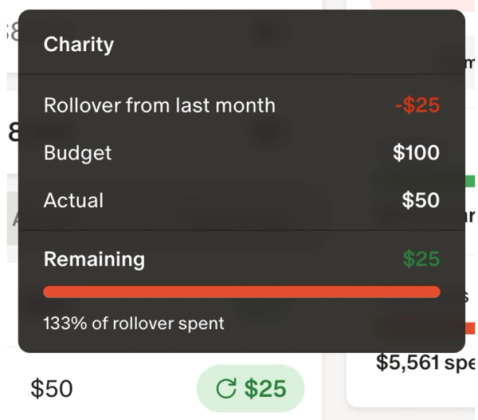
The best way to account for these expenses is to save over time with a sinking fund. A sinking fund creates a rollover category that has you save a certain amount each month for a planned upcoming expense, allowing you to spread out costs before the fact. For example, if you plan to sign up the kids for a summer camp in six months that will cost $1,500, you set up a sinking fund for $250 per month.
How Can Monarch Help My Family Budget?
Building a budget for an entire household demands visibility and real-time, detailed tracking. Monarch’s financial management platform gives you and your family the tools you need to build a budget, track and plan your spending, and give everyone in your household a bird’s-eye view of your financial plan.
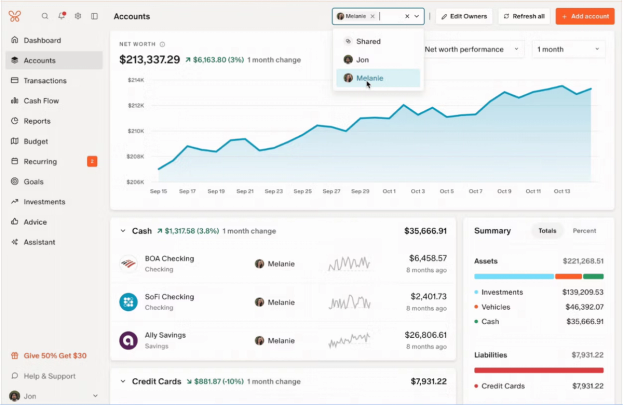
Family budgets mean that every stakeholder needs visibility into where the money is going. Monarch offers unlimited household member accounts to any one subscription, giving your whole family visibility into your linked accounts all in one place. With shared views, you can see the entire household budget at a glance, or filter out individual members to look at individual spending and categories.

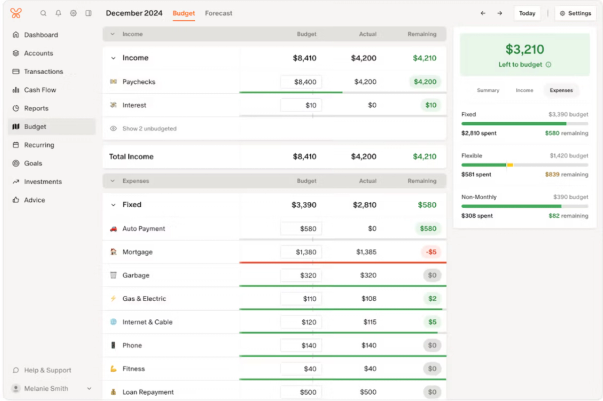
Just as no two families are the same, no two families will have the exact same budgeting style. Monarch gives you choices in how you configure your budget, with a traditional category budget for a classic 50/30/20 experience or envelope budget, or flex budgeting for more flexible “one number” planning.

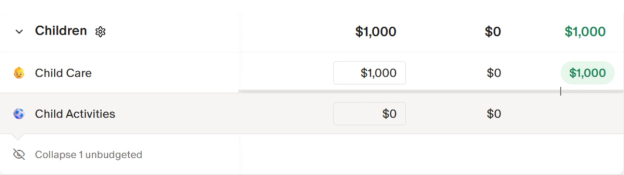
As kids grow older, their financial needs change. You can track your spending with custom categories for kid-related spending, and adjust as your children’s needs change.

As you save up for big-ticket expenses, it’s always good to know where your sinking fund stands. Monarch’s rollover categories allow you to save up for long-term expenses over the months while seamlessly integrating your savings into your budget.

Building a Family Budget That Works for Your Household
Household budgets (and Rome) aren’t built in a day, but, like anything worthwhile, progress with one step at a time. It might take a few months for you and your family to adjust your budget and your habits, but, in the end, it’ll be worth the peace of mind that comes with tracking and managing your family’s spending.
FAQs
Can a family of 3 live on $5,000 a month?
Yes, if they manage their expenses. Going by the 50/30/20 rule, $5,000 a month gives you $2,500 for needed expenses (such as housing, groceries, and childcare), $1,500 for wanted expenses, and $1,000 for savings and investments. One thing to keep in mind is childcare costs, which can require as much as 16% to 20% of the budget for one child. If childcare is weighing too much on the budget, consider having a parent stay home or look into alternative options.
How much should a family save each month?
In general, aim to put aside 10% to 20% of your budget for long-term savings and investments. You may need to adjust this number to account for high-priority savings (like restocking your emergency fund).
What's the best app for a family budget?
The best app for a family budget will accurately track your spending in real time, allow multiple users on the account so all relevant household members can get visibility on the budget, offer tools for tracking and managing spending categories, and give you a variety of ways to budget that fits your style.
How do you budget with an irregular income?
A zero-based budget is a good way to manage a less predictable income stream, since you have to assign every dollar a “job” each month. If you want a less rigid framework, a flex budget helps you track your fixed expenses while still giving you flexibility on non-fixed expenses, while staying within the parameters of your income.
How much does childcare cost per month?
According to the Economic Policy Institute, childcare costs an average of $1,233 per month, or $14,800 per year. While costs can vary from area to area, expect to spend in the range of $700 to $1,500 per month for daycare.