Nearly half of American adults are spending at or beyond their monthly income, according to the Federal Reserve’s 2024 SHED Survey. While you may have set your budget resolutions back in January, they may have defrosted by the time June arrives.
Don’t let a summer start to your budget make you feel like a failure, however. June is the ideal time to start budgeting, since you have real data to work with, more momentum and a shorter timeline in managing your goals, and real motivation to make the second half of your year a financial success.
Here’s why June is the best month to start your financial journey, and how to make a midsummer financial sweepup work for you.
Key takeaways
- With real data to fuel your category limits, a shorter goal timeline, and a spend-heavy second half of the year, midyear is a better time to start a budget (or conduct a budget review) than January.
- When building a second-half budget, focus on creating structure in your spending and limits, and create an actionable goal for yourself to track and work toward.
- If you’re reviewing your budget, look out for your cash flow, overspending categories, recurring expenses, and your savings and goal progress.
- Monarch can help you track expenses, manage your budget limits, and fuel your decisions with real data all in one place as you build out a budget that works for you.
Why June is actually the best time to start budgeting
While January is the default month for starting a budget (especially if your New Year’s resolution is to get your spending in check), it’s not too late to start budgeting halfway through the year. In fact, June is the best time to start your budget (or clean up your existing one). Why?
- You have six months of data to work with. Instead of trying to speculate on how much you’ll be making and spending, budgeting in June gives you half a year of expenses and savings to work with.
- You have a better idea of what expenses are coming up ahead. Halfway through the year, your plans for travel, major purchases like appliance replacements, and what your housing costs will likely be more concrete and easy to forecast than in January.
- Your property tax bills have probably come in. Most towns will have set the tax rate, published assessments, and sent you an estimate of your tax bill by the time mid-year rolls around, giving you a more concrete idea of how much you owe.
- You can plan ahead for school expenses. If you’re paying tuition for private school or college, you’ll have already received acceptance letters and have gotten a tuition estimate.
- The second half of the year has high financial stakes. Holidays, school expenses, travel, and other major expenses are all looming, which allows you to adjust your budget to save ahead of time.
- You can check in on your progress and “tentpole” your goals. If you’ve set financial goals for yourself in January, June is the time to check in on them to see their progress, adjust your milestones, or increase your targets based on how much you’re saving.
- It’s one of the biggest months for major milestones. June is both one of the most popular months to move house and to get married. Setting a cadence around these milestones will set up your yearly budget cadence moving forward, and allow you to plan with a fresh slate.
It’s not too late to start budgeting (the math shows why)
Six months into the year isn’t a missed deadline to budget. Instead, it’s the perfect opportunity to get your finances on track, and the perfect structure to start making manageable goals for yourself.
Twelve months can be a long time to stick to a goal, which is one of the reasons why only 9% of Americans who make resolutions actually stick to them throughout the year. Instead of setting yourself up for a marathon, June helps you make your goals a more manageable sprint.
Let’s look at the numbers. Six months equals about 26 weeks, or 26 paydays for a weekly earner (or 13 if you’re biweekly).
Over those 26 weeks, you set a reasonable savings goal that gives you the motivation and momentum you need to keep on track, instead of a 52-week slog that you have trouble sticking to.
For example, if you aim to save $400 a month ($100 a week, or $200 per biweekly pay period) starting in July, by the time December rolls around, you’ll have saved $2,600, which is more than enough to start saving for an emergency fund, start avalanching or snowballing your debt payments, or to put toward your retirement.
How to pick a budgeting style
Your budget will help you establish your parameters and stick to your spending and savings goals. Different budgeting types have different styles of saving and spending, which means it’s giving you options to choose a style that works best for you.
There are three main ways to budget: Flex budgeting, the 50/30/20 method, and zero-based budgeting. Monarch’s budgeting guide can give you more detail, though here’s a quick summary.
Budgeting type | How it works | Best for |
Flex budgeting | Your budget is divided into three expense buckets: fixed, flexible, and non-monthly. You set the limits based on what your fixed expenses (e.g. utilities, savings and housing costs) are and what you expect for non-monthly expenses. From there, your remaining cash, or "Flex number” sets the limit for your flexible expenses. | Flexibility, Simplicity, Beginner budgeters |
50/30/20 rule | Divide 50% of your income into needs, 30% into wants, and 20% for savings and investments | Simplified budget with more structure, Set savings amount, Category budgeters |
Zero-based budgeting | Give every dollar of income a “job” in a saving or spending category until you’re left with zero | Detailed categories, Strict spending limits, Variable monthly income |
For an idea of how each budget works, here’s an example.
Let’s say you have $5,000 in take-home income. Your mortgage is $1,200, your utilities are $200, your monthly subscriptions are $50, and your car payment is $700. For this particular month, you plan on buying a new dishwasher for $400. You’re also contributing $200 each month to stocking your emergency fund.
For a flex budget, the breakdown would look something like this. This budget, as you may have noticed, leaves your flexible expenses open-ended while giving you a solid framework for saving and paying for your essential expenses, making it a great budget for beginners who don’t necessarily want to pay as much attention to individual categories.
Category | Expenses included | Total |
Monthly expenses | Mortgage, Utilities, Subscriptions, Car payment, Savings | $2,350 |
Non-monthly expenses | Dishwasher | $400 |
Flexible expenses | Groceries, Clothing, Takeout, Travel, Gas, Discretionary purchases | $2,250 |
Here’s the breakdown for the 50/30/20 rule. Like the flex budget, this is ideal for beginners, as it provides you with a good structure and benchmark for how much you should be saving.
Category | Expenses included | Total |
Essentials | Mortgage, Utilities, Car payment, Groceries, Gas, Dishwasher | $2,500 |
Non-essentials | Clothing, Takeout, Travel, Discretionary purchases | $1,500 |
Savings | Savings, Investments, Debt repayment | $1,100 |
Here’s an example of a zero-based budget. While it is more intensive than the other two budget types, it can be ideal for individuals who want to be more aggressive with paying down debt, have more control and detail into their spending categories, or who have more variable income from month to month.
Category | Total |
Rent | $1200 |
Utilities | $200 |
Car payment | $700 |
Principal-only car payment | $300 |
Groceries | $400 |
Gas | $150 |
Subscriptions | $50 |
Clothing | $50 |
Restaurants/Eating out | $150 |
Gifts | $100 |
Savings | $200 |
Discretionary purchases | $500 |
Travel | $400 |
Dishwasher | $400 |
Buffer | $200 |
Whichever budgeting style works for you, once you have an idea of your ideal budget structure, you can start building out your mid-year financial plan.
Building your second-half budget in 5 steps
If you’re just starting out with a budget in June, here’s what you need to do.
Step 1: Know your monthly take-home income
Once you’ve picked out your budgeting method, start figuring out your cash flewow. List out your monthly expenses and subtract your total from your income. (Using a financial management platform like Monarch makes it simpler to track your expenses than doing it by hand.) The number you have at the end is your cash flow.
Depending on how much your cash flow is, you’ll want to make adjustments. You may want to cut your spending so you can save more or make additional payments on your debt, or so you’re not in the negative each month.
Step 2: List your fixed monthly expenses
From there, list out your fixed/essential expenses for each month, which will give you an idea of how much you have left over to adjust your category limits (though you can of course adjust certain spending amounts, such as cutting subscriptions or reducing your utility usage.)
Fixed expenses include:
- Housing payments
- Monthly insurance premiums
- Phone and internet bills
- Minimums on your loans or other debts
- Subscriptions
- Utilities
- Automatic monthly donations to charity
- Childcare
- Automatic savings deductions
Step 3: Categorize your discretionary spending
From there, you can start categorizing your discretionary spending, which you can do either manually or using an app like Monarch. This is where budgeting mid-year comes in handy, as you can use the previous three months’ data to help you track your average expense amounts.
From there, you can start making adjustments and setting limits, depending on your budgeting style and how much you want to save.
Step 4: Set goals for the latter half of the year
Once you’ve figured out how much you want to save and spend, it’s time to find a way to put your money to use. Set two to three goals for yourself that you feel you can achieve in the next six months, setting aside a set amount you feel comfortable with on a monthly basis. Your goal should focus on being achievable, especially if this is the first time you’re saving up, and should have a specific benchmark you want to achieve in a certain timeframe, such as saving up $2,400 in six months at $400 per month.
Examples of goals include:
- Building an emergency fund
- Saving for a new car
- Saving for a vacation
- Paying off debt
- Saving for house renovations
Step 5: Choose a tracking method and commit for 30 days
Once you have your budget and goals set, choose a tracking method and follow it for 30 days. The easiest way to do this is through an app that automatically tracks and sorts your spending categories, ideally across your different cards and bank accounts. This way you can track your spending and saving all in one place and keep an eye on how your expenses are lining up with your budget limits.
How to start a mid-year budget review
If you already have a budget in place, here’s how you can perform a mid-year cleanup.
Do a cash flow analysis
Similar to starting a budget, your first priority is to run your income against your expenses, both on a month-to-month basis and on the half-year’s average.
While your bank account and bills may look fine to you, a cash flow analysis can show you how much you actually are taking home each month — and how long you could last on your savings if you lost income.
2. Identify your overspending categories
Next is to run your budget limits against how much you actually spent, and see if there’s a pattern for any particular category.
While you may have run over your limits on a category now and again (such as spending more on gas than forecasted because of increased prices, or running over your takeout limit because your stove broke), if you’re seeing a consistent pattern, then you either need to make adjustments to your overall budget or start reining in on the spending.
3. Do a subscription audit
Now is also a good time to run through your subscriptions and see if it’s worth canceling some of them. When auditing your subscriptions, ask yourself:
- Have I used this subscription in the past month? If so, how often?
- Is there a cheaper or a free alternative (such as borrowing movies from the library instead of subscribing to a movie service)?
- How much money has this subscription actually saved me?
- If I use this subscription often, will I save more by paying for it annually instead of month-to-month?
4. Check in on your savings and investments
A savings checkup can help you make sure you have enough money saved for emergencies, retirement, and any other big expenses you have coming up. With working Americans having a median of less than $1,000 in retirement savings, according to the National Institute for Retirement Security, it’s crucial to get on track as soon as possible.
In June, you should be checking your:
- Emergency fund. Ideally, you should have three months of monthly living expenses if your income is stable and you have no dependents, six months if you have dependents, and nine to twelve if your income is variable or difficult to replace.
- Retirement accounts. Check to see if your savings are in line with what they should be for your age and your ideal retirement income, that you’re maxing out your employer match (Monarch recommends up to 6% of your gross income) and that you don’t have any old 401(k)s that need to be rolled over.
- College savings. If you have a 529 or other education investment account, check in on contributions, contribute any cash gifts from relatives, and make sure the plan you have is still giving you the services you need.
- Investment accounts. Conduct a portfolio review and see how your average returns are looking. If you’ve sold any stock, keep track of how much you owe and re-evaluate your tax strategy. Analyze your asset returns and balance your portfolio as needed.
If your savings are looking thin, now is the time to start adjusting your budget to get your accounts stocked up. If your savings are looking good, then you might want to start diverting some of your contributions to investments or other goals.
As well, when checking your savings, see what your interest rates are. If you find that the account is charging you fees or giving you an uncompetitive rate, consider switching accounts.
5. Map out your big expenses for the next six months
Now is the time to start forecasting your big expenses so you can save ahead of time and make adjustments to your budget. Some of the expenses to consider include:
- Big appliance purchases. If your dishwasher is making concerning noises, you can start creating a sinking fund for a replacement — or plan to restock your emergency fund if you need to replace it in a hurry.
- Car repairs and maintenance. Oil changes, tuneups, and inspection charges can rack up quickly.
- Annual subscriptions and bills. If you pay for a service yearly, or have a yearly insurance plan, plan out how much you’ll need to pay.
- Taxes. Paying property taxes early on can snag you a discount and tax advantages depending on your locality.
- Vacations. If you’re traveling in the latter half of the year, now is the time to check in on your budget and make sure you have enough saved.
- Holidays. Planning out your gift budget early on lets you snag more deals and save sooner.
- Tuition and school expenses. If you’re paying for college or private school, or have to buy new school supplies for the academic year, June is a good time to start planning.
- Housing changes. If you’re planning on moving, start forecasting your new housing expenses, including deposits/down payment, new monthly payments, and move out costs.
6. Go through your goals and set new ones
Goal check-ins keep you accountable and on-track as you save up or pay down debt, especially if you break down your goalposts over the year.
When evaluating your goals, see if how much you’ve been saving/paying down is enough to reach your milestone at your current rate. If it is, then stay the course, or consider contributing more to speed up your timeline.
If you’re close to completing your goal, think about your next steps and what you want to do with your old contributions, whether it’s starting a new goal or diverting your cash toward other goals.
If you’re off-track, see how you can get back on track, whether it’s by adjusting your contributions, moving your timeline, or adjusting your spending.
How Monarch helps with your mid-year budget reset
Getting started on your summer financial cleanup doesn’t have to be complicated. Apps like Monarch can help you tackle your budget and your financial plan and give you clarity on where your spending and saving are going.
Tracking transactions and figuring out your spending categories and averages doesn’t have to be tedious. Monarch not only automatically pulls your transactions from the last six months, but gives you suggestions for budget limits based on your averages — with the guarantee or no ads and no data sharing with advertisers or third parties.

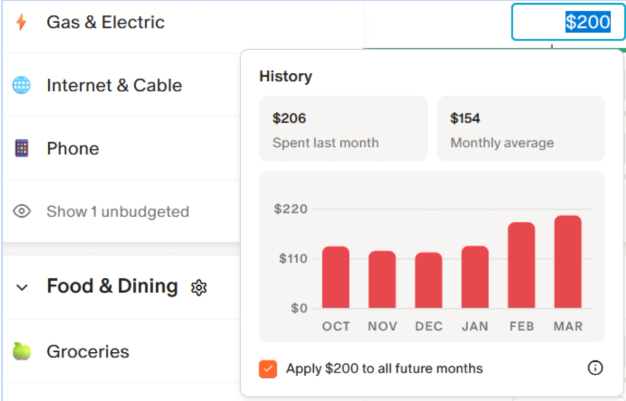
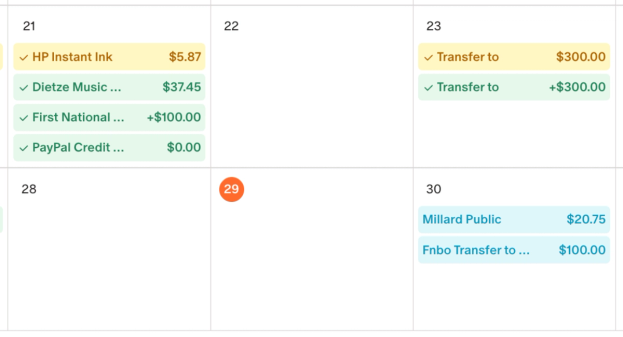
When you conduct your subscription audit, Monarch automatically tracks your subscriptions and recurring expenses, their due dates, and how much you’ve been spending on them so you can see them all at a glance.

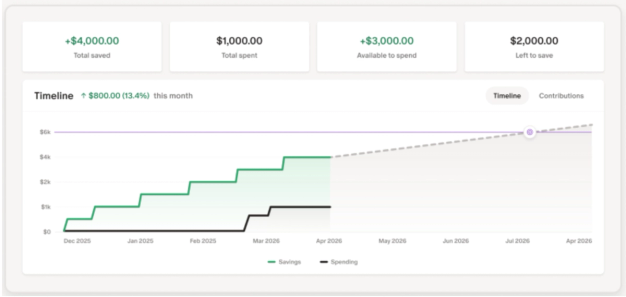
Tracking your financial goals and watching your progress is essential to staying motivated. Monarch’s Save Up and Pay Down goals visualize your progress and integrate your saving into your budget.

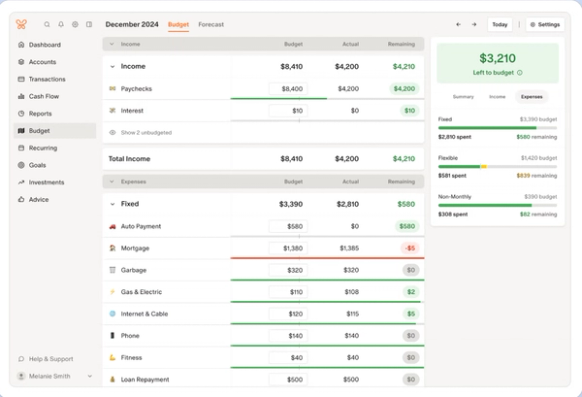
If you want to start off budgeting in the most simple way, Monarch’s default budgeting style is Flex budgeting, with automatic calculations for your flex number and auto sorting for your fixed and flexible expenses.

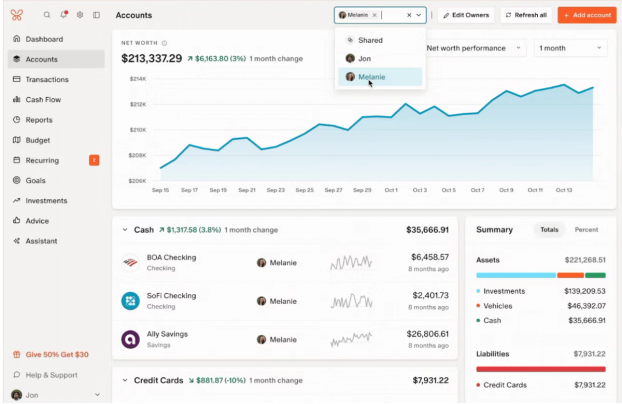
Finally, if you’re budgeting with a partner, you can add household members for free, giving you both a top-down view of your household budget and your combined cash flow.

Turn summer into your financial head start
Just as it’s easier for a beginner runner to do a half-marathon, it’s easier to start building your budget when you’re halfway through the year. Getting your financial plan started in the summer can give you more motivation to complete your goals, more data to fuel your budget, and give your finances a much-needed cleanup before you tackle the second, spending-heavy half of the year.
Monarch can help you build your financial plan using real data from your spending and member-tested tools to help you make your midsummer budgeting work for you.
FAQs
Is it too late to start budgeting in June?
Not at all. In fact, June is a good time to start budgeting, as it allows you to build a budget based on real data from your spending in the first half of the year, and allows you to map out expenses for the second half.
What's the easiest budgeting method for beginners?
Flex budgeting and 50/30/20 budgeting are both accessible ways to budget, providing a fairly simple structure for saving and spending without the need for as much time investment as other methods.
How often should you review your budget?
You should review your monthly budget on a weekly basis so you can keep your spending on track, and perform a quarterly and biannual budget review for a more long-term review and planning.
What should I include in a mid-year financial review?
In a nutshell: Make sure your income is more than your expenses, figure out if you’re overspending in any categories and make adjustments, review your subscriptions, check your savings and investments, plan for any big expenses ahead, and review your goals and create new ones as needed.
How do I stick to a budget when costs keep rising?
There are a few ways. You can either reduce expenses in other categories (such as spending less on takeout) or look to reduce expenses in the categories where costs are rising, such as carpooling to save on gas, looking out for sales on groceries, and turning the AC up or down to save on utilities.
What's the difference between budgeting and tracking expenses?
While tracking your expenses is part of budgeting, budgeting goes beyond by adding context to your spending. With a budget, you plan out your expenses, set limits on how much you want to spend, and decide how much cash you want to have left over at the end of the month. From there, you track your spending and make adjustments to align with the plan you outlined in your budget.